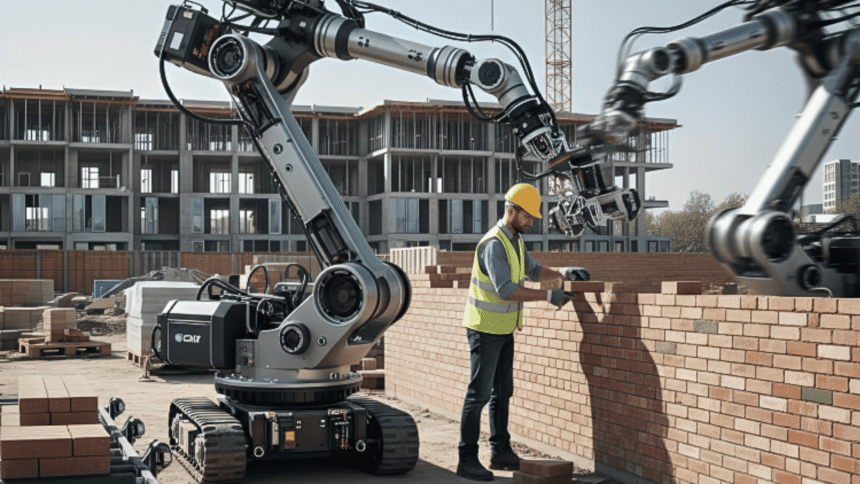
Bricklaying stands as one of the oldest trades in construction, demanding steady hands, sharp eyes, and endless endurance from workers. Yet today, robots zip through the same job much quicker, often three to six times the pace of even the best masons. These machines tackle the grunt work, leaving humans to handle the finer touches.
The Rise of Bricklaying Bots
Over the past decade, companies have poured effort into building robots that mimic a mason’s moves but crank out walls at breakneck speed. Take SAM, the Semi-Automated Mason from Construction Robotics in New York. This beast lays bricks at rates up to 1,200 a day, dwarfing a human’s typical 300 to 500. Another contender, Hadrian from Australia, boasts placing 1,000 bricks per hour, enough to frame a house’s walls in just two days of nonstop operation. These aren’t wild claims from lab tests; they’ve proven themselves on real job sites, from Virginia schools to Perth homes. What drives this speed? Raw mechanics paired with smart design that sidesteps human limits like fatigue and inconsistent rhythm.
Precision Without Pause
Humans tire after hours of bending, lifting, and tapping bricks into place. A top mason might hit 60 to 75 bricks an hour before needing a break, but robots grind on without complaint. SAM, for instance, grabs a brick, slathers it with mortar using a precise dispenser, and sets it exactly where blueprints demand, all in about 12 seconds per brick. Lasers scan the wall for sway from wind or scaffolding shifts, adjusting on the fly to keep lines straight. No second-guessing or do-overs mid-shift. This relentless pace stems from electric motors and hydraulic arms that repeat motions flawlessly thousands of times, while a human’s focus wanes.
Cutting Out the Slow Steps
Watch a mason at work: fetch a brick, clean it, mix mortar, spread it, position the brick, tap it level, then fill joints. Each step eats time, and distractions like weather or crew chatter add up. Robots streamline this dance. SAM’s arm extends to snag bricks from a nearby stack, applies mortar right on the brick, not the wall, for cleaner joints, and plops it down with pinpoint accuracy. Hadrian goes further with a 28-meter telescopic boom that cuts bricks to fit odd on-site spots, with no pre-cutting needed. No trips to fetch tools or pauses for sore backs. Humans still prep the site, load materials, and smooth edges, but the robot owns the bulk of the reps.
Tech That Sees and Adapts
Brains make these machines tick faster than flesh and bone. Sensors track velocity, angles, and depth; algorithms crunch data from 3D models to follow complex patterns, even stamping logos or texturing walls. A tablet lets the operator tweak plans for real-world hiccups, like a window shifted half an inch. Unlike humans, who eyeball alignments and risk drift over long stretches, robots measure constantly. This tech shines on straight runs or long walls, where repetition rules. In tests, SAM tripled output on basic masonry, slashing project timelines by weeks.
Humans and Bots: A Team Effort
Don’t picture robots shoving masons aside. They thrive as partners. A crew sets tracks or foundations, feeds bricks and mortar, and finishes corners or curves where finesse matters. One operator runs the show on a tablet, another tends to supplies, and a mason polishes the work. This split lets skilled workers focus on craft while bots handle the heavy lifting. Costs reflect teamwork: SAM runs about $500,000, but it pays off by easing labor shortages and cutting timelines. Masons who’ve paired with SAM often warm up quickly, seeing it as a back-saving ally, not a job-stealer.
Real-World Wins and Challenges
On a Virginia site, SAM built classroom walls in record time, proving it handles dust, heat, and uneven ground. Hadrian’s creators claim it trims a third off build times, lightens site loads, and even cuts carbon via efficiency. Yet hurdles remain. Robots falter in tight spots or wild weather without human tweaks. Setup takes time, and they’re priciest upfront. Still, as mason numbers dwindle and costs climb, these bots fill gaps. Firms report happier crews, less heavy lifting, and fewer injuries.
Looking Ahead to Faster Builds
The edge comes down to endurance, exactness, and efficiency. Robots don’t sweat, slip, or slow down; they stack bricks like clockwork, freeing humans to do what we do best. As software sharpens and prices drop, expect more sites humming with hybrid crews. Brick walls will rise quicker, homes will be cheaper, and trades will evolve. We’ve come far from handmade mortar beds, but the human spark, judgment, and creativity keep us in the game.