AMARILLO, Texas — Fermi America™, the U.S. energy developer listed on Nasdaq and the London Stock Exchange under the ticker FRMI, has deepened its strategic collaboration with Hyundai Engineering & Construction Co., Ltd. (Hyundai E&C) to advance nuclear planning work for Project Matador — its massive 11-gigawatt (GW) energy campus near Amarillo, Texas.
The two companies are jointly progressing Front-End Engineering Design (FEED) for four Westinghouse AP1000 reactors, a step that strengthens engineering foundations but does not include a full construction contract. Hyundai E&C, a South Korean firm with global nuclear delivery experience, is assisting Fermi in layout planning, cooling evaluations, and cost and schedule modeling critical to future execution readiness.
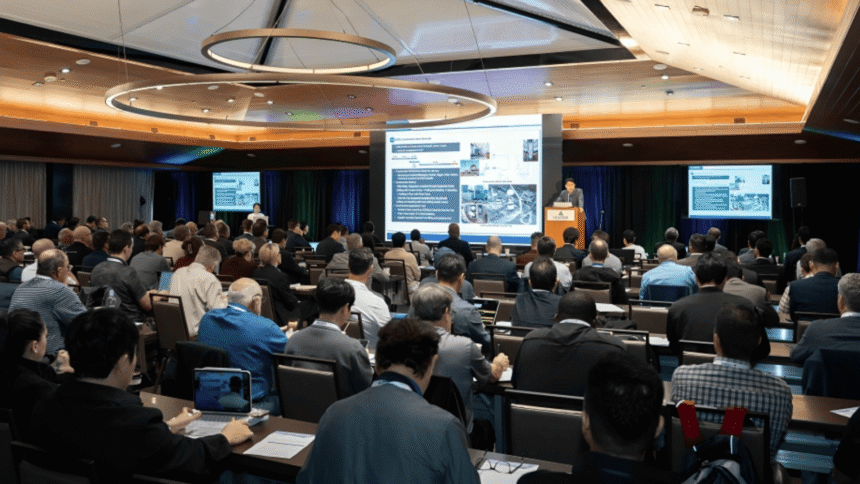
At a February 10 nuclear technology seminar in Dallas hosted by Hyundai E&C, leadership from both firms and dozens of U.S. contractors convened to discuss next-generation nuclear delivery techniques, supply chain readiness, and workforce development needed for large-scale projects in the U.S.
Fermi says this partnership aims to revive large nuclear construction in the United States, a sector with few new builds in decades. The company points to Hyundai’s record of delivering 24 reactors globally, including projects completed on schedule and budget, as a way to mitigate traditional nuclear project risks.
Despite this cooperation, a full engineering, procurement and construction (EPC) agreement has not been finalized or publicly announced, and timing for such a contract remains undetermined.
Project Matador: Scale and Ambition
Project Matador is designed as an 11 GW private energy and AI infrastructure campus, using multiple power sources including natural gas, nuclear, solar, battery storage, and utility grid connections to support demand from advanced computing, AI, data centers, and industrial users.
The initiative plans to develop four large AP1000 reactors as part of its long-term energy mix. Fermi has also received approval for gas power generation and has begun bringing in natural gas turbines to support the first phase of the build-out.
The Nuclear Regulatory Commission (NRC) has accepted portions of Fermi’s Combined License Application (COLA) for the four reactors, marking an important regulatory milestone since the U.S. has not seen significant light-water reactor applications accepted in recent history.
Financing and Market Reaction
While Fermi continues to make engineering and infrastructure progress, the company has faced significant financial and execution challenges:
- In December 2025, Fermi disclosed that its first anchor tenant for Project Matador terminated a $150 million Advance in Aid of Construction Agreement (AICA) after the exclusivity period expired, with no funds drawn. This disclosure caused Fermi’s stock price to plunge by about 33% in a single session.
- The termination undermined projected pre-construction funding and created uncertainty around the project’s near-term execution schedule. Fermi said it continues lease negotiations with the first tenant and is engaging other prospects.
- Multiple law firms have since filed securities class action lawsuits alleging that Fermi “overstated tenant demand” and failed to disclose risks related to dependence on a single tenant’s funding commitment. The lead plaintiff deadline for these cases is March 6, 2026.
Partnerships and Power Agreements
Separately from the nuclear partnership, Fermi has secured an electric service agreement with Southwestern Public Service Company, a subsidiary of Xcel Energy, to supply up to 200 MW of interim power to the Matador campus, starting with 86 MW in January 2026.
Fermi’s integration approach blends independent sources to support initial operations while larger facilities, such as the nuclear units, are under development.
Fermi’s collaboration with Hyundai E&C reflects a renewed push to rebuild U.S. nuclear construction capacity, a sector long dormant after decades of limited new builds and cost overruns on aging projects. The involvement of an experienced global contractor like Hyundai aims to bring execution discipline to nuclear work in the U.S., but a definitive EPC contract and financing commitments have not yet been publicly confirmed.
The loss of a major tenant funding agreement and subsequent securities litigation highlight the execution and financial risk that remains alongside technical and regulatory progress. Analysts say Matador could become a model for future private energy campuses if Fermi overcomes these hurdles, but timelines and costs remain uncertain.
Image Credit – letsdatascience.com