Meta Platforms has increased its planned investment in a data center project in El Paso, Texas, to more than $10 billion, marking a significant escalation from its initial $1.5 billion commitment. The move reflects the company’s growing focus on building large-scale infrastructure to support artificial intelligence (AI) workloads.
The El Paso facility, first announced in October 2025, is expected to reach a capacity of approximately 1 gigawatt (GW) by 2028. At that scale, it would rank among the largest data center campuses globally and serve as a key part of Meta’s long-term AI strategy.
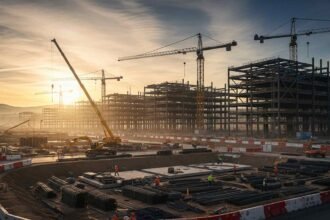
The expansion is expected to drive a substantial increase in construction activity. At peak, the project will employ more than 3,000 workers, while around 300 permanent jobs are anticipated once the facility becomes operational. Local officials have positioned the project as a major economic boost for the region, particularly in terms of job creation and infrastructure development.
Meta confirmed that the data center will be its 29th globally and its third in Texas. The company has been steadily expanding its physical infrastructure footprint across the United States, focusing on locations that offer access to land, energy resources, and connectivity.
The investment comes amid a broader surge in spending across the technology sector. Major companies are committing heavily to AI infrastructure as demand for computing power rises. Industry-wide, capital expenditure is expected to reach hundreds of billions of dollars in 2026, as firms compete to scale up capacity for training and deploying advanced AI models.
Energy remains a central factor in the expansion. Meta stated that it is supporting the development of more than 5,000 megawatts of clean energy in Texas to match the electricity consumption of its data center operations. The company has emphasized that its goal is to align energy use with renewable generation, although such large-scale projects continue to raise questions about grid capacity and long-term sustainability.
Water usage, another key concern for data centers, especially in regions like West Texas, has also been addressed in broad terms. Meta indicated it will work with local partners and nonprofit organizations to support water restoration and conservation efforts in the area. However, detailed technical specifications about cooling systems or water recycling have not been publicly disclosed in the latest update.
The expansion comes at a time when Meta is increasing its overall focus on AI development. The company has been investing in infrastructure, chips, and software capabilities to support its next generation of AI products and services. This shift is part of a wider industry trend where physical infrastructure is becoming critical to maintaining competitiveness in AI.
At the same time, the scale of spending has drawn attention from investors. Meta’s stock has faced pressure in recent months, influenced by a combination of high capital expenditure commitments and legal challenges related to platform design and user safety. The company has also implemented workforce reductions in certain areas, reflecting ongoing cost management efforts alongside its investment push.
Despite these pressures, Meta continues to prioritize long-term infrastructure expansion. The El Paso project illustrates how companies are moving toward fewer but significantly larger data center campuses, designed to handle the increasing demands of AI systems. These facilities require not only substantial financial investment but also access to power, land, and regulatory support.
The development also highlights a shift in the competitive landscape. As AI systems grow more complex, the ability to secure and operate large-scale infrastructure is becoming a defining factor. Companies that can build and sustain such capacity are likely to shape how AI technologies are deployed and commercialized in the coming years.
In this context, Meta’s decision to expand its West Texas investment signals a clear direction: scaling infrastructure is no longer optional but central to staying relevant in the AI race.