A single, uncorrected error in a commercial building’s blueprint can cost an average of $3,000 if it progresses to a Request for Information (RFI) during construction, and upwards of $25,000 if it manifests as a field change order. According to data from the American Institute of Architects, up to 70% of all construction reworks stem from design deficiencies, coordination omissions, and structural discrepancies that leak from initial documentation out into physical field operations.
In an industry where profit margins hover between a razor-thin 2% and 5%, the financial hemorrhaging caused by manual report building and unflagged plan document oversight is a systemic vulnerability. Over 187,000 discrete drawing issues have historically evaded initial manual human checks, highlighting the strict operational limitations of standard manual peer reviews in modern architecture, engineering, and construction (AEC) practices.
The Blind Spots of Manual Blueprint Quality Assurance
Before automated design verification and field reporting, structural engineering firms, architectural practices, and general contractors relied entirely on manual reviews to identify coordination overlaps and compile site logs. The process required highly skilled engineers to spend weeks parsing thousands of technical documents, cross-referencing multi-disciplinary drawing sets, mechanical, electrical, and plumbing (MEP) schematics, and thousands of pages of local building codes.
This process was highly vulnerable to cognitive fatigue. A typical commercial project comprises hundreds of large-format sheets, meaning cross-discipline conflicts, such as a structural beam physically obstructing an HVAC duct, frequently went unnoticed. Furthermore, when engineers transition from office plan sets to active, fast-moving jobsites, documenting field observations manually with clipboards and cameras becomes a tedious operational bottleneck that delays critical progress updates and risks costly downstream reworks.
The Engineer Behind Construction Automation
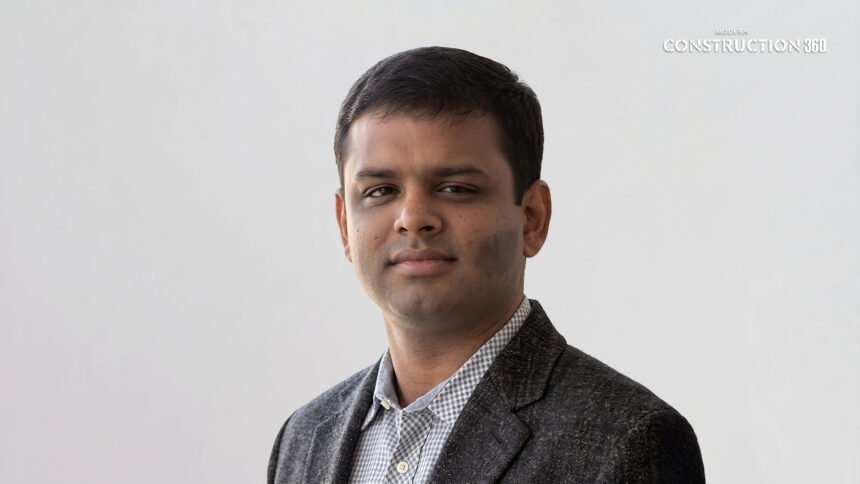
Aakash Prasad is the Co-Founder and CEO of InspectMind AI, an artificial intelligence company built to address these pre-construction and site documentation vulnerabilities. Prasad holds a Bachelor of Science in Electrical Engineering and Computer Science (EECS) from the University of California, Berkeley, and developed his technical foundations conducting early machine learning research at Google.
Prasad combines this software engineering background with deep domain expertise in physical infrastructure. Following his time in Silicon Valley tech labs, he entered the AEC market to build and scale Design Everest, a technology-driven architecture and engineering firm that successfully completed over 10,000 residential and commercial projects. He later co-founded ProStruct Engineering, a civil and structural engineering enterprise, scaling it to a $15 million valuation. This distinct sequence of advanced computer science education followed by a decade of scaling physical engineering enterprises positioned Prasad to bridge the gap between AI and the built environment.
Legacy Foundations and the Tech-Driven Pivot
Prasad’s engagement with the construction sector is rooted in a multi-generational family legacy; he is a third-generation construction professional whose grandfather operated as a civil engineer and whose father worked as a structural engineer. The foundational concept for InspectMind AI emerged from observing his father manage the pressures of manual document verification.
Prasad witnessed the personal toll of structural oversight, noting how his father stayed up late reviewing paper sets to ensure errors did not reach the field. Despite rigorous manual inspection, the absolute complexity of modern building specifications made complete human accuracy nearly impossible. Prasad realized that the industry’s reliance on manual red ink, physical paper charts, and tedious jobsite report writing was unsustainable, driving him to build an automated system capable of analyzing complete architectural datasets and organizing field logs in minutes rather than weeks.
From Y Combinator to Automated Code Compliance
InspectMind AI was founded in 2023 by Aakash Prasad alongside Co-Founder and Chief Technology Officer Shuangling Yin, a Carnegie Mellon Computer Science alumnus who previously engineered payment risk infrastructure at Airbnb and security frameworks for Google Workspace. The co-founding duo leveraged their technical backgrounds to gain admission into the Winter 2024 batch of Y Combinator, securing vital early-stage institutional validation and an initial $500,000 seed funding round.
Rather than adopting a traditional software-as-a-service (SaaS) model with restrictive per-seat licensing, Prasad structured the initial product rollout around a transactional, self-serve utility pricing system charging fixed rates per sheet and per code checked. This strategy lowered adoption barriers for solo engineering practices and Fortune 500 developers alike. By prioritizing direct, friction-free browser uploads without requiring complex sales calls, the company established an automated onboarding pipeline that transformed raw engineering files into structured error reports with rapid turnaround times.
Scaling Systems Amidst Industry Conservatism
The primary hurdle faced by InspectMind AI was the construction industry’s historical resistance to digital transformation. To overcome this skepticism, Prasad focused on delivering transparent, evidence-backed results rather than asking clients for blind trust in black-box AI models.
Every issue flagged by the platform was explicitly mapped to its exact source snippet within the drawing set and linked directly to the corresponding regulatory code reference. This approach turned potential liabilities into verification workflows, helping the platform achieve an 85% to 90% average accuracy rate. This technical reliability enabled rapid growth. By 2026, InspectMind AI had expanded its platform to serve over 500 active AEC firms, successfully indexing and analyzing more than 187,000 unique constructability errors and saving single enterprise clients over $2 million in downstream field reworks.
Multimodal Analysis of the Built Environment
InspectMind AI’s core innovation lies in its proprietary multimodal engine, which is engineered to interpret complex visual schematics and on-site imagery rather than simple text matching. The platform reads complex structural diagrams, architectural elevations, riser diagrams, and hand-drawn or scanned PDFs across civil, structural, MEP, and fire protection disciplines.
The software acts as an automated auditor, simultaneously cross-referencing geometric designs against thousands of pages of external regulatory frameworks, including the International Building Code (IBC), California Building Code (CBC), and Americans with Disabilities Act (ADA) guidelines. By identifying spatial conflicts, such as a fastener unable to reach a connection point or an allowable area calculation mismatch, the system provides a comprehensive safety net before construction begins. Additionally, the system features an agile field-reporting pipeline where voice notes and on-site photo uploads are automatically organized and mapped directly back to project plan parameters.
Analytical Metrics for Design Optimization
To help teams evaluate project risk, InspectMind AI classifies errors into clear severity tiers, from low-level annotation errors to critical structural issues. The software then converts these findings into standard industry formats like Excel or Procore, allowing users to generate actionable RFIs with a single click.
| Metric | Manual Engineering Review | InspectMind AI Automated Check |
| Turnaround Time (100–300 Sheets) | 2 to 4 Weeks | 1 to 2 Hours |
| Average Cost (Office / Multifamily) | $8,000 – $20,000 | $350 – $700 |
| Error Discovery Volume | 5 – 15 issues flagged | 100 – 500+ issues flagged |
| Cross-Discipline Check Cap | High human omission risk | Comprehensive multi-layer analysis |
| Onboarding Friction | Manual contract negotiations | 6-minute automated self-signup |
Engineering Objectivity and Data-Driven Leadership
Prasad’s leadership philosophy is grounded in technical pragmatism and clear, data-driven metrics. He has cultivated an internal culture that avoids high-pressure enterprise sales tactics in favor of direct product utility and measurable ROI.
This engineering-first perspective is reflected in the company’s customer-facing commitments, such as offering a full refund if an AI plan check fails to surface at least five valid constructability or code issues. Prasad manages his team by focusing on objective product development, tasking engineers with expanding the system’s compliance catalog while maintaining data isolation in secure, bank-level-encrypted AWS environments. By removing user seat licenses and allowing firms to share reports freely with external consultants, Prasad encourages cross-industry collaboration and transparency.
Automating Global Construction Compliance
As InspectMind AI expands, Prasad is positioning the platform to move beyond basic error checking toward full predictive project optimization. The long-term product roadmap focuses on deepening integration with field inspection tools, enabling the platform to cross-examine voice notes, field photos, and site videos against active design files in real time.
As urban infrastructure projects grow in complexity, the demand for automated, instantaneous code compliance verification is rising. By deploying machine learning models that understand building plans as cohesive, multi-dimensional systems rather than separate documents, Prasad is helping transform construction from a reactive, mistake-prone industry into a highly precise, data-driven field.
For industry observers and practitioners tracking this digital evolution, platforms like InspectMind AI represent a fundamental shift in risk mitigation. Here at Modern Construction 360, we continue to document these technological advancements, analyzing how the integration of automation and data intelligence is reshaping the methodologies, economics, and long-term legacy of the global built environment.