In an era where technology touches every facet of our lives, the backbone of urban living, property management, often remains tethered to outdated, analog systems. Despite managing billions in assets and millions of residents, the industry frequently struggles with fragmented communication, manual data entry, and slow response times. The shift toward a digital-first ecosystem is not merely a convenience; it is a fundamental requirement for the sustainability and efficiency of modern housing.
Across Europe, property managers are increasingly facing tighter margins, rising regulatory demands, and a generation of tenants who expect instant, mobile-friendly services. Meeting these pressures requires more than incremental software upgrades; it demands a total restructuring of how buildings and the people inside them interact. iDWELL has emerged as the spearhead of this transition, turning the complex, traditionally frustrating web of real estate administration into a streamlined, automated, and transparent digital journey.
The Friction in Real Estate Administration
Before the widespread adoption of modern PropTech (Property Technology) platforms, property management was defined by administrative inertia. The industry operated on legacy desktop software that functioned in strict silos, preventing seamless collaboration between property managers, tenants, owners, and external craftspeople.
On an average day, a property manager could expect to be bogged down by manual document handling, endless telephone queues, and an overflow of unorganized emails regarding minor maintenance issues. This created a profound “information gap.” Residents felt disconnected and uninformed about the status of their buildings, while managers faced mounting operational costs and employee burnout due to highly labor-intensive, reactive workflows.
The economic drag of these inefficiencies was substantial. Every delayed repair, lost invoice, or ignored tenant complaint chipped away at the asset’s profitability and long-term value. For the real estate sector to mature alongside other digitized industries like banking and logistics, it requires a shift from reactive, paper-heavy processes to proactive, automated, and centralized digital engagement.
Orchestrating Change
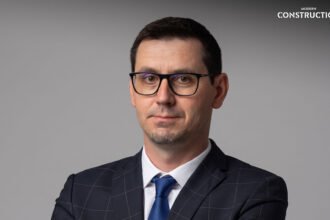
Alexander Roth, the CEO and Founder of iDWELL, recognized early on that the future of property management lay in bridge-building through technology. While Roth serves as the driving strategic force and public face of the enterprise, he established the company alongside a specialized technical founding team, including Chief Technology Officer Alexander Usunov, to ensure a balance between real estate expertise and robust software engineering.
Roth’s leadership is marked by a pragmatic approach to innovation, ensuring that digital tools serve the immediate operational needs of real estate professionals while simultaneously preparing them for the future of building automation. By integrating Artificial Intelligence (AI), automated workflows, and comprehensive Customer Relationship Management (CRM) solutions into the daily life of a property manager, Roth has enabled a transition from tedious manual oversight to high-level strategic asset management. Under his stewardship, iDWELL has moved beyond being a simple software vendor to becoming an essential infrastructure partner for property firms across Germany, Austria, and Switzerland (the DACH region). His philosophy avoids tech-for-tech’s sake, focusing instead on real-world utility that yields measurable time savings.
Catalyzing the Vision
The inspiration for iDWELL originated in the most authentic of environments: a casual family conversation. In 2016, while dining with his father-in-law, an experienced professional in the traditional real estate management sector, Roth caught a firsthand glimpse of the daily hurdles, friction points, and inefficiencies that permeated the industry. He observed the stark disconnect between the high digital expectations of modern tenants and the antiquated, analog systems that managers relied on to meet those demands.
This “lightbulb moment” shifted his professional perspective completely. He stopped viewing real estate merely as a static, physical asset class and began seeing it as a massive, underserved digital opportunity. He realized that the fundamental problem was not a lack of effort or competence by property managers, but rather a lack of robust, modern tools designed specifically for the unique, fast-paced workflows of the housing sector. Driven by this realization, Roth set out to build a platform that would not just solve minor inconveniences but completely redefine the standard of service across the entire European market.
From Concept to Digital Leader
The journey of iDWELL began in Vienna in 2017 with deep market analysis, intense coding phases, and the conceptualization of a cloud-based platform that prioritized extreme ease of use and automated workflows. The engineering team focused heavily on developing a flexible software architecture capable of scaling rapidly with the high volume of real estate portfolios. By 2018, the company had successfully moved from conceptual design to live deployment, partnering with some of the largest property management firms in Austria to test and refine their core technology in real-world scenarios.
Success in this initial phase was built on a relentless commitment to feedback loops. By closely listening to early adopters on the ground, the iDWELL team refined its CRM solutions, mobile ticketing system, and communication tools to align perfectly with the daily compliance and operational requirements of the field. This early focus on customer-centric success created a deep foundation of trust. It paved the way for rapid market expansion, eventually attracting major venture capital backing, culminating in a substantial 10-million-euro investment round led by Knight Capital in late 2024, which empowered the company to scale its operations, aggressively expand its engineering capabilities, and solidify its footprint in highly competitive international markets.
Scaling Through Market Complexity
As iDWELL grew, it encountered the steep operational challenges typical of high-growth technology companies: the pressing need to balance rapid new feature development with the rigorous, uncompromising stability demands of enterprise-level software. Scaling to support over 900 professional property management customers and a massive portfolio of more than 2 million housing units across 140,000 buildings required more than just clean code; it necessitated a robust corporate shift toward specialized customer onboarding and dedicated project consulting.
The company successfully navigated these scaling hurdles by evolving its service model away from rigid “software in a box” delivery. Instead, iDWELL began providing holistic digital adoption support, including active enterprise project consulting and the establishment of a specialized, free-access Real Estate Academy. This initiative helped clients maximize their internal digital adoption rates and upskilled property management staff who were hesitant about changing their old habits. This dual commitment to the human side of technology and infrastructure engineering allowed the business to retain its high-quality service standards and strong customer loyalty, even as it grew to support a massive, diverse client base across multiple borders.
Proprietary Innovation and Industry Influence
The core market strength of iDWELL lies in its unique ability to integrate previously disparate, disjointed elements of property management into a single, highly intuitive digital dashboard. The platform’s proprietary methodology centers on the complete automation of routine communication flows, which historically consumed up to 70% of a property manager’s working hours. By leveraging advanced artificial intelligence, including its specialized “Greta AI” system, to automatically sort, summarize, tag, and route incoming emails and maintenance service requests, the platform frees managers to focus on high-value asset optimization.
This holistic innovation ecosystem is driven by several tightly integrated capabilities:
- Centralized CRM Ticket System: Acts as a single, immutable source of truth for all resident, owner, and internal staff interactions, ensuring no request is ever lost or delayed.
- Service Provider Network Integration: Seamlessly coordinates external craftspeople, inspectors, and contractors, instantly sending digital work orders and drastically reducing the lead times for building repairs and emergency maintenance.
- iDWELL Finance: Features specialized, AI-driven financial workflows and document management tools that boost invoice data recognition accuracy up to 95%, reducing the massive administrative burden of accounting and reporting.
- White-Labeled Mobile Tenant App: Increases transparency and dramatically improves resident satisfaction by providing 24/7 access to building documents, announcements, and live tracking of active service requests.
Shaping Organizational Culture
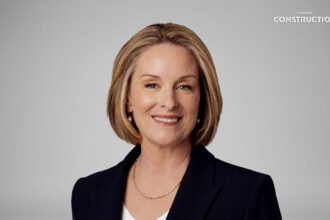
Internal leadership at iDWELL is defined by a distinct corporate culture of continuous learning, cross-departmental collaboration, and radical proximity to the customer. Alongside Chief Operating Officer Anna Matzenberger, Roth actively fosters an environment where the entire team acts as an empathetic partner to their clients rather than just a distant software vendor. This philosophy is embedded deeply in the company’s daily routines, where software engineers, product designers, and account representatives regularly sync to dissect and address user feedback directly.
Decision-making within the firm is intentionally balanced between quantitative data analytics and qualitative human insight. By deliberately maintaining a flat, transparent, and agile organizational environment, the leadership ensures that critical software innovations and market-driven pivots are never delayed by bureaucratic corporate layers. This high-velocity approach allows the company to move quickly, stay highly responsive to localized regulatory shifts in the DACH region, and maintain the precise level of service required to support thousands of professional managers who trust the platform with their corporate reputations.
Looking toward the horizon, the objective for iDWELL remains sharply defined: to establish itself as the undisputed, definitive digital operating system for the European property management industry. The upcoming development roadmap focuses heavily on deepening the application of predictive AI algorithms to further automate complex, multi-variable administrative tasks, thereby allowing real estate firms to manage significantly larger property portfolios without a linear increase in headcount or overhead.
Beyond its current operational capabilities, the company is positioning its data architecture to lead the industry through broader, generation-defining macro trends, such as the digital tracking and management of climate-neutral building initiatives, ESG (Environmental, Social, and Governance) reporting, and energy-efficient housing upgrades. By continuing to iterate on its technology, expand its ecosystem of digital integrations, and foster a deep network of professional industry partners, iDWELL is not merely digitizing old, existing processes; it is setting the stage for a new, radically transparent, and exceptionally efficient era of European real estate management.
At Modern Construction 360, we continuously track these paradigm-shifting movements across the built environment. Innovations like those pioneered by Alexander Roth and iDWELL remind us that the future of property is inherently connected, intelligent, and digital. Ensuring that the entire lifecycle of a building, from the initial architectural drafting and construction phases to daily property administration, is fully equipped to handle the challenges of tomorrow remains the defining goal of the modern era.