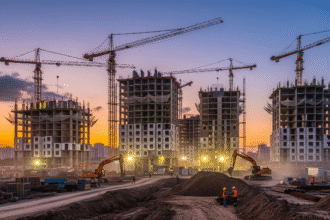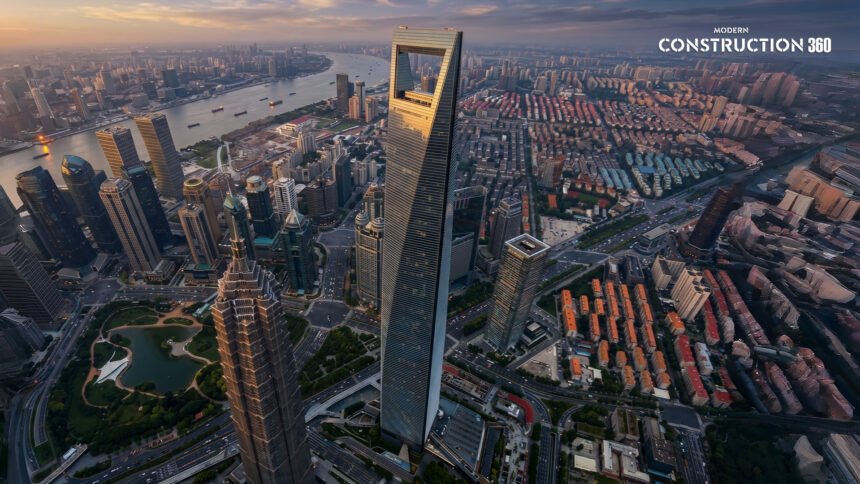
You are standing at the base of a gleaming 60-story tower. Glass stretches skyward. The lobby is already packed with suited workers and coffee cups. Somewhere up on the 40th floor, a hedge fund is quietly managing billions. And the building itself? It cost a billion dollars to put there.
But here’s what almost nobody asks: where did that billion actually go?
Not in a vague “materials and labor” kind of way. Concretely. Floor by floor. Dollar by dollar. The billion-dollar skyscraper cost breakdown is more surprising and more telling than most people expect. Because it turns out, a staggering amount of that money never touches a single steel beam.
How Much Does It Cost to Build a Skyscraper?
Constructing a skyscraper typically costs between $300 million and $6 billion, with the final price depending on location, height, design complexity, materials, labor costs, and local regulations. A billion dollars puts you squarely in the mid-tier: serious money for a serious building, but nowhere near the stratospheric costs of Manhattan’s most ambitious towers.
On a per-square-foot basis, skyscraper construction averages $400 to $1,500 depending on location, height, and design. Run the math on a 1.2-million-square-foot tower, and you’re already deep into the billions before you’ve picked your lobby marble.
The Land Comes First, and It Can Cost Hundreds of Millions
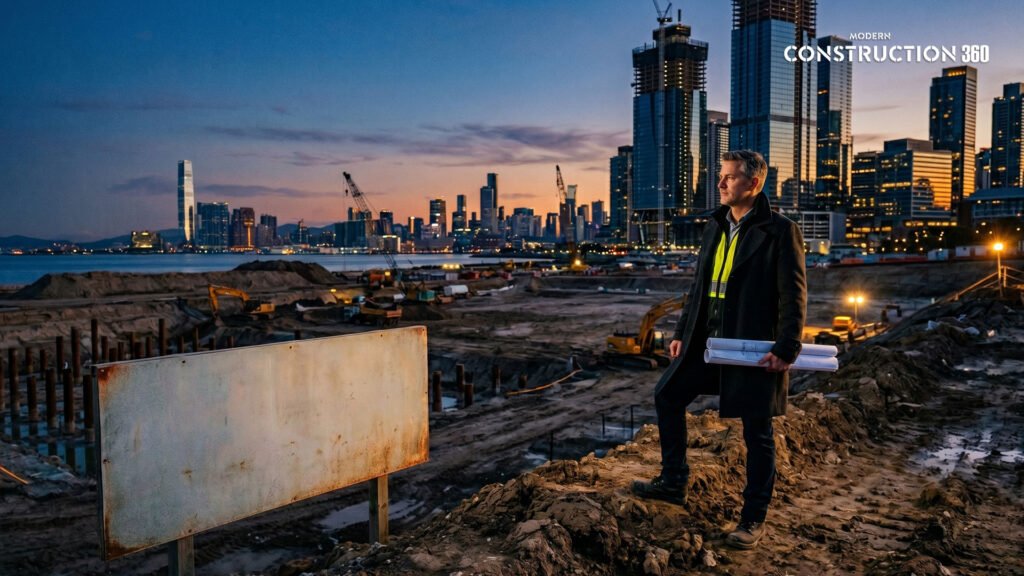
Before a single permit gets filed, developers write the largest check of the project, for dirt.
Urban center land in prime cities can cost between $15 million and $40 million per acre. In Midtown Manhattan, that number becomes almost abstract. The land under One Vanderbilt, a 65-story office tower, was part of a total project cost that came in around $3.3 billion, including land, construction, and local infrastructure upgrades.
That’s the dirty secret of skyscraper economics: in the world’s most expensive cities, you might spend 20 to 30 percent of your entire budget before breaking ground. The building hasn’t started. The cranes aren’t up. You’ve already spent $200 million.
Steel, Concrete, and Glass: The Materials That Eat the Budget
Now we’re talking structure. The skeleton of a skyscraper, the steel, reinforced concrete, and curtain-wall glass, represents one of its single largest hard costs.
Steel prices for construction average between $400 and $1,800 per ton, a volatile spread driven by shipping, energy costs, and labor. For a supertall building that may require 50,000 or more tons of structural steel, price swings in that commodity alone can shift total project budgets by tens of millions.
Concrete tells a different story. The Burj Khalifa required 330,000 cubic meters of concrete, 55,000 tonnes of steel rebar, and 22 million man-hours of labor, at an estimated construction cost of around $1.5 billion. That’s the world’s tallest building, 163 floors, 828 meters, built for a fraction of what a similar-height project would cost in New York. A gap almost entirely explained by location and labor. IllustrArch
Glass rounds out the material picture. The curtain-wall systems on premium towers, those floor-to-ceiling panels engineered to handle wind loads, thermal performance, and seismic flex, aren’t window glass. They’re precision-manufactured units with prices to match, adding significantly to the total cost of the building envelope.
Labor: The Cost Nobody Talks About Enough
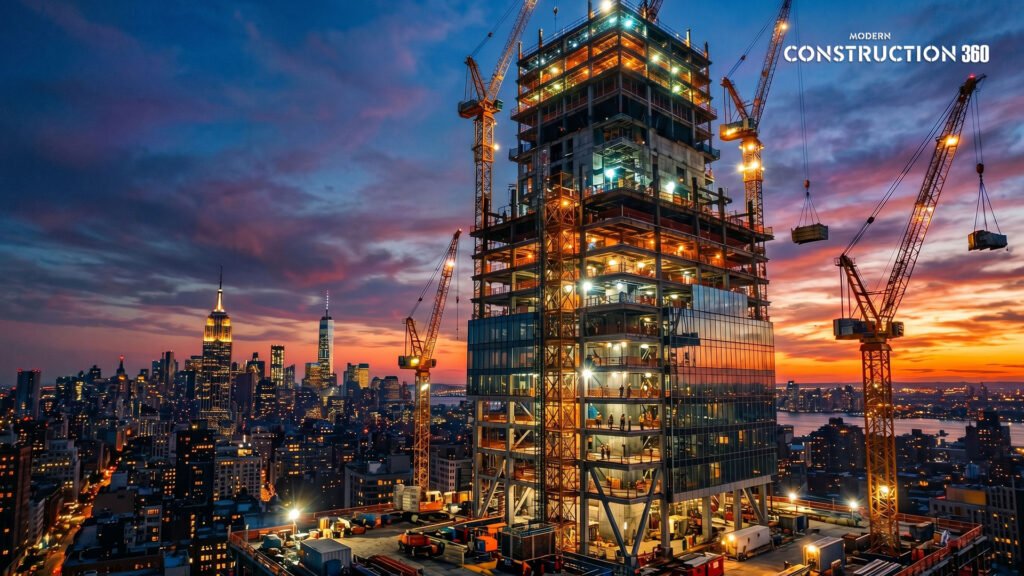
Here’s a number worth sitting with: materials and labor together account for roughly 75% of a skyscraper’s overall construction price.
Labor, in particular, is the variable that makes the same building cost wildly different amounts in different cities. In New York City, costs are among the highest globally due to premium land prices and unionized labor rates, while in emerging markets, comparable designs run 30–40% cheaper.
On a billion-dollar project, that’s a $300–$400 million swing. Same blueprints. Same height. Different zip code.
For a supertall tower in a union city, you’re coordinating ironworkers, crane operators, concrete finishers, glaziers, electricians, and HVAC specialists, often running multiple crews simultaneously across dozens of active floors. In large, population-dense metropolitan cities, it can cost between $3.5 million and $20 million per floor to build a skyscraper. Multiply that across 60 stories, and you see where your billion goes.
What Are Soft Costs, and Why Do They Surprise Everyone?
Soft costs are every expense that isn’t a physical part of the building. No steel, no glass, no concrete. And yet they quietly consume 25–40% of the total project budget.
Soft costs include design and engineering fees, approvals, financing, legal fees, taxes, developer fees, contingencies, and marketing, typically adding 25–40% on top of hard construction costs.
Think about what that means. On a $700 million hard construction budget, you’re looking at another $175–$280 million in fees, interest, permits, and legal costs before you open the doors. The starchitect alone, if the developer goes that route, can command fees north of $50 million. Wind tunnel testing, environmental studies, geotechnical surveys, and construction insurance: each is a line item that adds up with brutal consistency.
For one Manhattan superslim tower, soft costs alone came in at $264 million, with the structure itself costing another $700 million, totaling $1.6 billion for the completed project. Building the Skyline
That’s a real building. Real numbers. And soft costs ate nearly a quarter of the tab.
Mechanical Systems, Elevators, and the Hidden Infrastructure
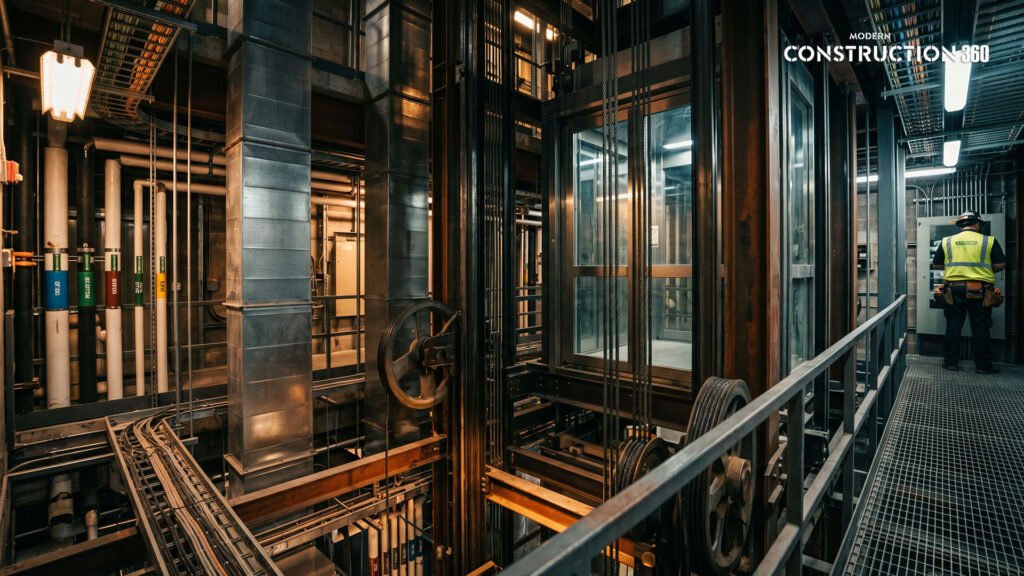
Nobody buys a ticket to ride a building’s HVAC system. But those invisible systems, the mechanical, electrical, and plumbing infrastructure known collectively as MEP, are a massive budget item.
High-speed elevators in a supertall building can cost millions per unit, and a major tower may require dozens of them. HVAC systems must heat, cool, and ventilate dozens of floors efficiently, requiring large-scale, high-performance equipment that is expensive both to install and maintain. Fire protection systems, backup generators, smoke detectors, and emergency lighting add further costs under strict safety codes. ServiceTitan
Smart building systems, automated lighting, climate control, and integrated security add another layer. They’re increasingly expected by premium tenants. And they don’t come cheap.
Interiors and Amenities: Where the “Extra” Billions Hide
Once the shell is up, you’re just getting started.
Interior finishes in a luxury commercial or residential tower are where cost-per-square-foot numbers go completely off the rails. Premium finishes elevate a building’s appeal while raising both construction time and labor costs, with high-end materials like marble flooring averaging around $3,700 per square foot. Apply that across hundreds of thousands of square feet of lobby, corridors, common areas, and premium floors, and the numbers become eye-watering. ServiceTitan
For residential supertalls, amenities have become an arms race. Steinway Tower, the world’s thinnest skyscraper at 84 stories and 1,428 feet, reached approximately $2 billion in total construction costs. Units in the building start at $7.75 million for a studio, with the penthouse, a three-story, 7,130-square-foot apartment, selling for over $66 million. The building isn’t just selling square footage; it’s selling the address, the amenities, and a skyline identity that no suburban office park can replicate.
Real-World Billion-Dollar Examples
It helps to see the numbers against real buildings.
Burj Khalifa, Dubai — 163 floors, 828 meters, approximately $1.5 billion. Relatively “affordable” by global supertall standards because Dubai’s labor market is fundamentally different from New York’s, the same building in Manhattan would cost several times more.
One World Trade Center, New York — Standing at 1,776 feet with 94 stories, One World Trade Center cost a reported $3.8 billion, making it one of the most expensive buildings in the Western Hemisphere, and a reminder that symbolism carries a price of its own.
One Vanderbilt, New York — 65 stories, one of the city’s premier office towers, with a total project cost (land, construction, and infrastructure) of around $3.3 billion, including substantial upgrades to surrounding transit and public space.
Each of these is a billion-dollar-plus project. Each tells a different story about where those dollars landed — and how much of the tab had nothing to do with the building itself.
So Who Pays for All This, and Why Does It Keep Going Up?
Developers don’t typically write one check. Skyscraper financing is usually a layered combination of equity, construction loans, pre-sales or pre-leases, and institutional investors. Interest accrues throughout the build, which can run five to eight years for a major supertall. That financing cost alone can add tens of millions to the final total.
And the direction of travel is relentless. Steel prices fluctuate. Union wages increase. Land in prime cities only ever gets more expensive. The original Twin Towers cost $900 million to build, a figure now projected at $5.5 billion if constructed today.
That’s not inflation theater. That’s the compounding reality of building tall in a world where every input cost trends upward and the margin for error narrows with every additional floor.
The Billion Dollar Question
A billion-dollar skyscraper cost breakdown isn’t really a story about construction. It’s a story about economics, geography, ambition, and risk. The steel and glass are almost the simplest parts. What makes these projects so expensive, and so fascinating, is everything that surrounds the physical act of building: the land, the labor markets, the regulatory gauntlet, the soft costs hiding in plain sight, and the race to deliver amenities that justify increasingly surreal price tags.
The next time you look up at a gleaming tower, you’re not just seeing a building. You’re seeing a billion-dollar bet, and now you know exactly how that bet was placed.