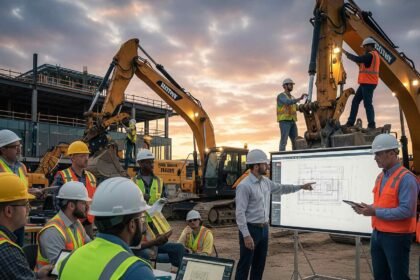
The construction industry in the United States has long been defined by a striking paradox: while technology has revolutionized almost every other sector of the economy, the fundamental way we build homes has remained largely stagnant for nearly a century. We continue to rely on traditional, site-built construction, a process frequently plagued by weather delays, labor shortages, material waste, and unpredictable project costs. It is an industry built on the manual exertion of the past, often struggling to integrate the speed and precision of the modern era. However, a quiet transformation is taking place within advanced manufacturing facilities across the country.
This shift represents much more than a mere change in technique; it is a fundamental reimagining of what a building can be, how quickly it can be delivered, and how efficiently it can operate. At the heart of this evolution is a commitment to precision engineering, environmental sustainability, and a belief that the future of housing should be as smart, connected, and reliable as any other high-performance consumer technology.
The Friction of Traditional Building
For decades, the standard approach to residential and commercial construction in America has been inherently inefficient. When a project is built entirely on-site, it remains completely exposed to the elements from day one. Rain, extreme heat, and freezing temperatures can halt progress, warp materials, and jeopardize strict delivery timelines. Furthermore, the reliance on fragmented labor pools means that coordination between various independent trades, such as plumbing, electrical, framing, and finishing, is often a complex logistical hurdle. This lack of synchronization frequently leads to significant material waste, as off-cuts and unused supplies pile up in dumpsters, driving up environmental footprints and inflating final budgets.
Investors, developers, and everyday homeowners are left to navigate a traditional system where the final price tag is rarely the one originally quoted. This persistent cycle of uncertainty, delay, and physical waste has created an urgent demand for a more industrialized, predictable, and intelligent approach to building.
The Architect of Change
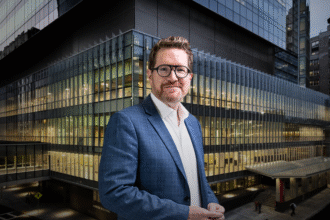
Brian Kuzdas, the CEO, President, and Co-Founder of S2A Modular, is a seasoned professional whose extensive career has been defined by identifying and capitalizing on major market shifts. With a deep foundation in the American real estate landscape dating back to 1985, Kuzdas built his initial reputation in the demanding commercial real estate sector of the Chicago metropolitan area. By the 1990s and early 2000s, he had scaled his business operations to manage the acquisition of hundreds of millions of dollars’ worth of real estate, successfully converting thousands of apartments into condominiums through his notable brokerage initiatives.
This extensive hands-on experience gave him a clear, firsthand view of the structural vulnerabilities inherent in traditional development. He observed how slow, manual-heavy processes could hinder profit margins and delay community growth. Rather than remaining a conventional developer, Kuzdas chose to disrupt the industry’s mechanics entirely, shifting his focus to the immense untapped potential of off-site, high-tech modular construction.
The Catalyst for Innovation
Every great advancement in an established industry typically begins with the realization of a better way to operate. For Brian Kuzdas, this defining turning point occurred in 2018, while he was purchasing a property in La Jolla, California, intending to tear it down and rebuild. During this period, he was formally introduced to advanced modular construction. He immediately recognized that the conventional site-built approach he had relied on throughout his career was being outpaced by the logic of building indoors. He understood that by shifting construction into a controlled factory environment, builders could eliminate weather unpredictability, drastically minimize waste, and implement precision engineering that is virtually impossible on an open job site.
This profound realization served as the core spark for S2A Modular, which was established with the ambitious mission of creating a distributed network of high-tech “MegaFactories” designed to standardize high-performance, energy-efficient building across North America.
Engineering the Future
S2A Modular functions much more like a precision technology company than a traditional homebuilder. The organization’s operational philosophy centers squarely on the “MegaFactory” model, a state-of-the-art manufacturing facility where residential, multi-family, and commercial structures are built with the same rigorous quality control and micro-tolerances found in advanced manufacturing. Within these facilities, the entire construction process is digitized and systematized. Every structural beam, electrical harness, and interior finish is managed by a dedicated team working inside a stable, climate-controlled environment, ensuring that the structural integrity of every completed unit consistently meets or exceeds strict national building codes.
By utilizing specialized software and advanced manufacturing workflows, the company delivers projects with remarkable speed, often months ahead of traditional site-built timelines. This factory-controlled approach provides developers and buyers with absolute cost certainty, ensuring that the majority of construction expenses are locked in before the structure ever departs for its final destination.
Scaling Through Hurdles
Scaling a high-tech, manufacturing-based construction enterprise in the United States presents a unique combination of regulatory and operational challenges. Navigating complex and often conflicting municipal building codes, securing a specialized workforce trained in both traditional construction and advanced manufacturing, and stabilizing global supply chains for high-end sustainable components require exceptional strategic foresight. However, the leadership team at S2A Modular has systematically addressed these hurdles through vertical integration and disciplined expansion. By continuously refining factory layouts, investing in proprietary design methodologies, and forging strong partnerships with trusted industry suppliers, the company has successfully scaled its footprint.
Recent strategic additions to the executive leadership team, such as appointing experienced Chief Financial Officer Tom Wyman to oversee financial strategy and capital planning, have further reinforced the company’s operational foundation. This steady growth is reflected not just in the volume of units delivered, but in the expanding network of production facilities designed to serve markets nationwide.
A Vision of Integrated Efficiency
The core technical competency that sets S2A Modular apart from legacy construction competitors is its unwavering focus on the “GreenLux” standard. This innovative approach treats a structure not merely as shelter, but as an integrated, high-efficiency system designed to minimize environmental impact while maximizing occupant comfort. The company’s vision focuses on constructing ultra-low-amperage, low-voltage buildings that incorporate smart-home technology directly into the architectural framework from inception. This allows occupants to monitor and manage energy consumption in real time, substantially lowering utility overhead while extending the lifespan of vital building systems.
By prioritizing solar integration, superior insulation, and advanced climate-control technologies, S2A Modular is leading the charge toward a more sustainable built environment. This overarching vision is anchored by an accomplished executive team with decades of combined experience spanning corporate finance, custom architecture, and large-scale real estate development.
Leadership in Action
Within S2A Modular’s corporate culture, Brian Kuzdas fosters a leadership style built on absolute accountability, professional transparency, and a relentless dedication to operational excellence. He fosters an environment in which engineering challenges are approached collaboratively, treating each modular project as a complex puzzle that demands precision and creativity. This hands-on philosophy permeates every level of the organization, from the leadership boardrooms to the active factory floors. The management approach emphasizes continuous process improvement, where production workflows are regularly evaluated and optimized to eliminate inefficiencies.
By maintaining close oversight of daily operations and long-term strategic milestones, the leadership team ensures the company remains agile, responsive to market demands, and fully aligned with its foundational mission to modernize American construction.
A Lasting Legacy
As the United States continues to grapple with persistent housing shortages, rising material costs, and an urgent need for sustainable infrastructure, the modern methodology pioneered by S2A Modular proves increasingly vital. The long-term roadmap for the company involves the continued expansion of its MegaFactory network, ensuring that communities across the country gain reliable access to durable, rapidly deployed, and energy-independent structures. The enduring legacy that Brian Kuzdas and his team are establishing is one of true structural transformation, guiding an entire industry away from the resource-heavy, unpredictable practices of the past and into a new era of intelligent, efficient, and accessible construction. By successfully bridging the gap between luxury architectural design and mass-production efficiency, S2A Modular is actively laying the groundwork for a more resilient and sustainable future.
As the housing sector continues to evolve, the lessons learned from pioneers who challenge the status quo remain invaluable to industry professionals and developers alike. Observing how modern manufacturing and thoughtful leadership can reshape an entire landscape offers a glimpse into what is possible when vision meets execution. For deeper dives into the innovators and transformative projects driving the future of the built environment, you can always look to the stories and analyses we share here at Modern Construction 360 as we continue to track the pulse of the industry.