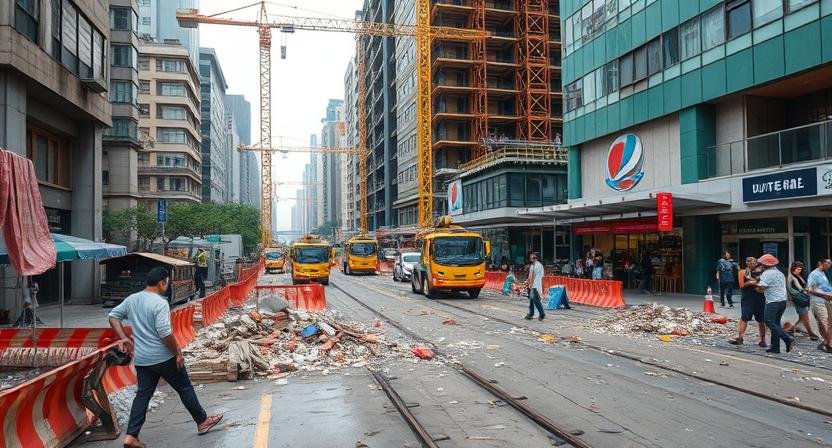
Mega infrastructure projects promise monumental change, new transport hubs, bridges, tunnels, and urban renewal that aim to reshape how cities function. Yet the reality for residents often involves months or years of daily life grinding to a halt amid noise, blocked roads, and confusion. Managing the chaos unleashed by these mega-projects is a test of a city’s planning skills, communication, and sheer resilience.
Grasping the Immensity of the Challenge
Mega-projects are feats of engineering complexity and size that put enormous stress on a city’s systems. They involve multiple contractors juggling countless moving parts, often in tight urban spaces. Roads that were lifelines suddenly become construction zones, public transport routes get rerouted, and businesses face unpredictable foot traffic. The scale alone can overwhelm local services and frustrate residents whose normal patterns are disrupted.
Cities know these disruptions are inevitable, but how they respond can either mitigate or magnify community distress. It begins with acceptance that chaos is a given, then working relentlessly to manage it through rigorous planning and communication.
Rigorous Planning: The Backbone of Control
Without a detailed roadmap, chaos will spiral. Cities and project managers invest heavily in comprehensive plans that break down the mega-project into manageable phases. Each phase is mapped with real timelines, resource allocations, and contingency plans. Cutting-edge tools like Critical Path Method (CPM) and digital project modeling (BIM) help identify pinch points before they explode into crises.
These plans must also integrate extensive risk assessments, covering environmental impacts, traffic flows, and even social backlash. For example, peak traffic patterns are carefully studied to schedule the most disruptive work during off-hours or weekends. By anticipating pinch points, cities can arrange alternative transport options, adjust traffic signals, and inform the public in advance.
Clear Communication: Keeping Trust Alive
One of the biggest tests during mega-projects is maintaining public trust. Residents are more tolerant when they feel informed and involved, especially when their daily routines are disturbed. Cities employ multi-channel strategies, websites, social media, hotlines, and community meetings to update citizens on what to expect, when, and why.
Transparency about delays or unexpected issues also helps temper frustration. Some cities go further by setting up visitor centers or information booths near construction zones where people can get real-time updates and talk to project staff. This visibility humanizes the project and reminds everyone that disruptions serve a larger goal.
Balancing the Scales: Minimizing Daily Disruption
Even with perfect plans, some disruption is unavoidable. Cities use tactical measures to reduce the pressure: advanced traffic management systems reroute vehicles efficiently; temporary pedestrian pathways ensure safe access; noise barriers limit sound pollution during night works. Compensation programs for affected businesses, such as tax breaks or promotional campaigns, show recognition of the toll taken.
Technology plays a growing role here, too. Sensors track air quality and noise levels, while drones monitor traffic congestion, feeding data into control centers that guide immediate responses. Through such tech-assisted vigilance, cities can react swiftly to unforeseen problems and adjust operations dynamically.
Collaborative Governance: A Networked Effort
A mega-project never runs smoothly without tight coordination among stakeholders. Governments, contractors, utility providers, emergency services, and community groups must align their priorities. Effective governance structures create clear accountability, facilitating rapid conflict resolution and decision-making.
Phased execution, breaking a colossal project into smaller contracts, allows for more focused management and reduces the tangled “interface risks” where different parts of a mega-project converge. Insurers and legal advisors also work closely to manage financial risks and handle disputes before they escalate.
Learning from Setbacks
The reality is that mega-projects often suffer delays and cost overruns. Yet, each challenge teaches valuable lessons. Cities increasingly embrace adaptive management, reassessing plans regularly, incorporating feedback from residents, and using real-time data to refine schedules and work methods.
Climate resilience adds an extra layer. Long-term projects now factor in future risks such as flooding or extreme weather to ensure infrastructure remains reliable decades ahead. Lessons from past mega-project struggles inform how cities brace for, endure, and ultimately overcome disruption.
Finding Order in the Storm
Mega-projects are indispensable to modern urban life, yet they thrust cities into temporary chaos. Managing this disruption demands more than engineering expertise; it calls for holistic, people-centered strategies rooted in detailed planning, transparent communication, technological innovation, and collaborative governance.
While the noise and delays test patience, the goal remains clear: to emerge with infrastructure that adds lasting value, ensuring the fleeting chaos yields a transformed, better-functioning city. In this challenge, cities balance on the edge of disorder and order, wielding careful control to steer daily life through the storm.
This nuanced approach offers a roadmap for any city facing the daunting trials of mega-project development, a reminder that the path through chaos can be managed, even tamed, with determination and foresight.