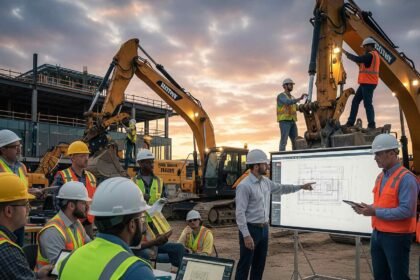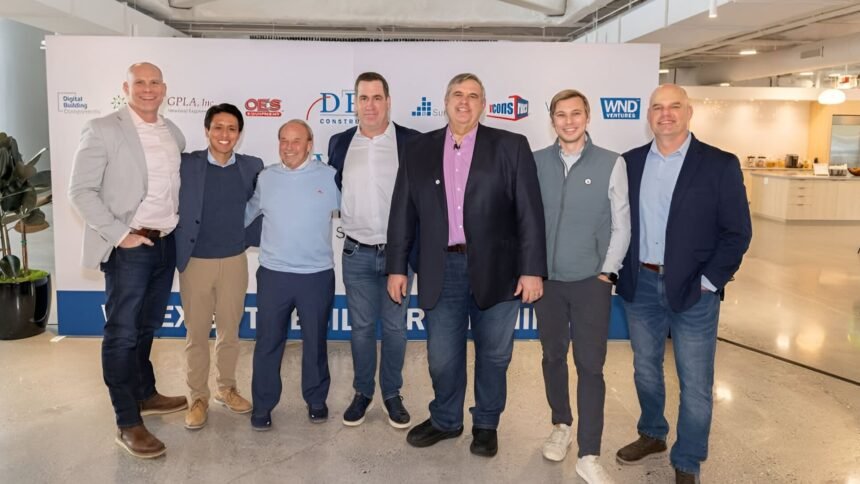
DPR Construction has opened its new Silicon Valley office and prefabrication hub in Santa Clara, California, combining administrative operations with advanced prefab capabilities to boost efficiency in the region’s demanding construction market.
The approximately 113,702-square-foot facility on Patrick Henry Drive repurposes a distinctive wedge-shaped building into a unified campus. It allocates 68,160 square feet to open office space and 45,542 square feet to prefabrication, research, and development. DPR Construction, along with affiliates from its Family of Companies, OES, EIG, and GPLA, built and now occupies the site, marking a strategic consolidation for West Coast projects.
This setup breaks down traditional silos between office staff and craft teams, fostering daily interactions in shared spaces. Designed by SmithGroup, the campus follows principles of celebrating construction work, inclusivity for all roles, and prioritizing safety with productivity. As a senior editor tracking prefab trends, I see this as a smart evolution; it mirrors how top firms are blending white-collar strategy with blue-collar execution to cut delays in high-stakes tech builds.
Prefab Hub Details
The Prefabrication Assembly Facility (PAF) stands out as DPR’s key investment in off-site construction methods. It supports self-performing teams in drywall, finish carpentry, architectural concrete, roofing, building envelopes, and specialty systems. Components are preassembled here using virtual design and construction (VDC) tools in a controlled indoor environment, enabling year-round production free from weather disruptions.
Built on 5S and Lean manufacturing principles, the hub enhances safety, quality, and output while minimizing on-site congestion and schedule risks. DPR plans to double its prefab capacity through this California prefab hub, serving Bay Area clients and beyond. In my view, this prefab hub positions DPR ahead of competitors; prefab adoption lags in California despite labor shortages, and DPR’s scale could set a benchmark for reliable delivery in volatile markets like semiconductors and biotech.
A ribbon-cutting ceremony on February 19, 2026, celebrated the launch and underscored DPR’s deep Silicon Valley roots. Jack Poindexter, DPR’s Northwest regional leader, highlighted the facility’s role in innovation and collaboration: “By bringing our administrative, craft, and prefabrication teams together… we’re creating a workplace that celebrates construction.”
Bay Area co-business unit leader Kevin Chen emphasized unified experiences: “When teams share the same amenities, it builds trust and connection.” These moves support faster decisions in advanced technology, life sciences, and healthcare sectors, where DPR excels. Factoring in DPR’s employee-owned model with 11,000 professionals globally, this feels like a calculated bet on integrated teams driving loyalty and precision, rare in an industry plagued by turnover.
Sustainability Focus
Adaptive reuse of the existing structure slashes material waste and reduces embodied carbon compared to new builds. Features include mass timber, low-carbon concrete with fly ash, slag, and waste CO2, cutting emissions by 38% and avoiding over 1,160 metric tons of CO2.
Targets encompass Net Zero Energy, LEED Gold, WELL Gold, and Net Zero Carbon certifications. This aligns with Silicon Valley clients’ green mandates, especially amid stricter regs. From an editorial lens, DPR’s eco-strategy isn’t greenwashing; quantifiable cuts like these prove prefab hubs can lead to decarbonization, pressuring peers to follow suit without sacrificing speed.
By centralizing operations, DPR streamlines communication and self-perform work, critical as prefab grows in California construction. In my assessment, this facility, especially the California prefab hub, cements DPR’s edge in a prefab era; with tech campuses booming, integrated hubs like this will define winners, offering predictable outcomes where traditional methods falter.