The global real estate and construction sectors control the physical footprint of modern civilization, accounting for nearly 40% of global energy-related carbon emissions and an equivalent share of solid waste. Yet, the foundational data layer required to operate, maintain, and safely transition these multi-trillion-dollar physical assets remains profoundly broken. Across Europe and North America, billions of critical data points, ranging from structural blueprints and fire safety certifications to maintenance logs and material specifications, are trapped inside analog ring binders, disconnected local servers, and fragmented email archives.
This structural opacity creates an operational crisis. Estimates indicate that more than 80% of historical building information exists in unstructured formats. Property owners, asset managers, and general contractors routinely lose thousands of hours annually to manual document retrieval. Beyond the immense administrative drag, this data fragmentation carries severe, real-world consequences. Missing regulatory compliance documents can stall multi-million-dollar real estate transactions, delay green retrofitting initiatives, and disrupt routine facility inspections. More critically, as demonstrated by historic structural and fire failures across Europe, inadequate and inaccessible safety documentation represents an acute institutional risk to human life.
The Architectural Crisis of Static Data
Before the introduction of modern automation, the built environment operated under a structural paradox: buildings evolved dynamically through tenant handovers, system overhauls, and regulatory updates, but their documentation remained static. When a commercial property changes hands or undergoes a major renovation, the building owner inherits a chaotic collection of historical files. This data includes technical manuals, architectural drawings, and environmental certifications created by hundreds of different vendors over several decades.
In a traditional asset management workflow, verifying the compliance of a single commercial property requires a specialized team to manually review thousands of individual pages. This dynamic presents three major operational bottlenecks:
- Transactional Friction: During commercial real estate transactions, the absence of organized documentation forces extensive due diligence delays. Essential transaction rooms cannot be completed without verified compliance records, directly inflating legal fees and threatening time-sensitive capitalization rates.
- Decarbonization Barriers: The push toward a circular economy and net-zero emissions requires an exact audit of a building’s current materials and energy performance. Without clear data on what materials exist within a structure, assessing its potential for component reuse or energy optimization is nearly impossible.
- The Regulatory Compliance Pivot: New European and UK legislative mandates, such as the Building Safety Act and the EU Energy Performance of Buildings Directive, have shifted compliance from a periodic checklist to a continuous legal requirement. Landlords face significant statutory penalties if they fail to maintain a definitive, easily accessible record of their property portfolios.
The Architect of Digital Order
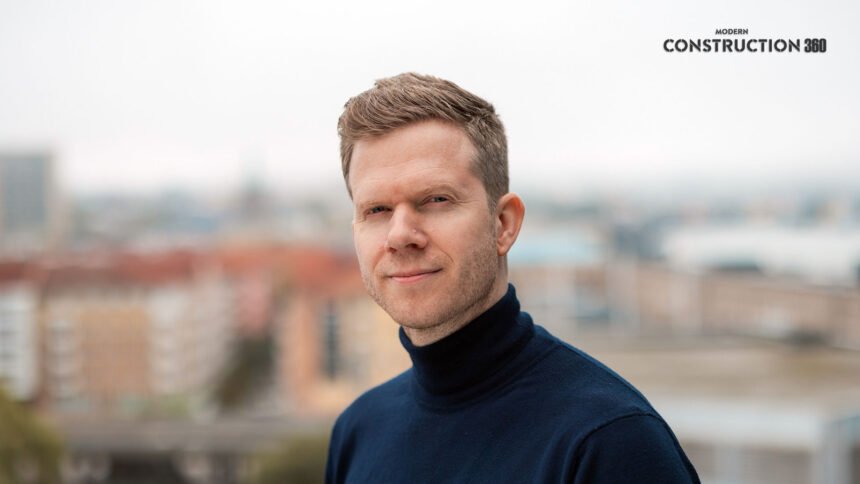
Fredrik Halmøy Wisløff is the CEO and Co-founder of Findable AI, an artificial intelligence company focused on automating building documentation and transforming asset management. Armed with a technical background and an analytical perspective on industrial inefficiencies, Wisløff has positioned himself as a disruptive leader within the property technology (PropTech) sector. Rather than viewing the documentation crisis as a simple administrative hurdle, Wisløff recognized it as a massive data-engineering problem hiding in plain sight.
As a leader, Wisløff bridges the gap between complex artificial intelligence engineering and the operational realities of institutional real estate. Under his leadership, Findable has grown from an early-stage Norwegian startup into a dual-headquartered automated platform operating out of Oslo and London. By focusing strictly on the specific context of building data, Wisløff has shifted the industry status quo away from manual indexing and toward automated, AI-driven asset intelligence.
The Catalyst for Automation
The motivation behind Findable stemmed from a direct encounter with industrial inertia. Throughout his career, Wisløff observed how advanced technologies were rapidly modernizing sectors like logistics and finance, while the real estate industry, the largest asset class in the world, remained dependent on physical archives and unstructured PDF folders. The specific “lightbulb moment” occurred when analyzing the sheer volume of redundant labor expended by facility managers simply trying to answer baseline operational questions, such as identifying a fire shutter valve or verifying an electrical certificate.
Wisløff realized that the market was treating this systemic challenge with superficial solutions. Software companies were building cleaner user interfaces and larger cloud storage repositories, but they still required human users to manually upload, tag, and organize every single file. Wisløff saw that property managers did not actually want a better storage system; they wanted immediate answers buried within their data. This realization shifted his mission from building an enterprise content management tool to engineering an AI platform designed to completely automate document classification.
Engineering the Infrastructure of Asset Intelligence
In 2021, Fredrik Wisløff co-founded Findable alongside machine learning expert Lars Aurdal, technical strategist Knut Lembach-Beylegaard (Hellan), Sondre Malde Pedersen, and Linn Kristin Stokvik. The founding team set out to design a specialized cloud platform capable of processing, understanding, and organizing building documentation automatically. The initial engineering challenge was steep: building documentation is notoriously noisy, consisting of low-resolution scans, handwritten field notes, complex architectural schematics, and highly technical jargon.
The team focused on building proprietary machine learning models trained specifically on building industry standards and regulatory compliance frameworks. The platform was designed to parse headlines, text blocks, structural drawings, and technical diagrams to instantly determine a document’s classification, historical context, and specific relevance to facility management.
By 2022, Findable validated its core value proposition by securing a €2 million seed investment round led by KOMPAS VC, with participation from Construct Venture and Malling & Co Venture. This strategic capital injection allowed Wisløff to scale product engineering, move beyond basic keyword search functionality, and build out robust integrations with existing facility management systems.
Scaling Through Macroeconomic Shifts
The transition from a validated seed-stage product to an international enterprise platform required navigating volatile macroeconomic shifts. As global interest rates climbed and commercial real estate valuations faced pressure, property owners became hyper-focused on operational efficiency, cost reduction, and risk mitigation. Wisløff capitalized on this shift by repositioning documentation health from a long-term administrative ideal to an immediate financial necessity.
Findable demonstrated that automating document workflows could shrink tasks that traditionally took weeks down to a matter of minutes. This operational efficiency allowed the company to scale rapidly, expanding its platform footprint to manage over 2 million distinct documents comprising more than 15 million processed pages.
This growth trajectory culminated in a major €9 million Series A funding round led by the prominent Berlin-based B2B SaaS venture firm Point Nine. The round, finalized in late 2024, also saw continued support from specialized built-environment investors, providing Findable with the financial foundation to double its internal workforce and aggressively scale its enterprise operations across the United Kingdom and continental Europe.
Turning Static Pages into Living Intelligence
Wisløff’s core expertise lies in transforming technical machine learning capabilities into clear business value for the real estate sector. Under his guidance, Findable’s proprietary innovation has evolved through three distinct evolutionary phases:
- Automated Classification: The foundational layer uses AI models to automatically ingest unstructured folders and index files according to regional building codes, asset types, and safety compliance rules.
- Semantic Natural Language Search: The system enables facility managers to execute conversational queries, allowing users to instantly surface specific spatial blueprints or compliance clauses without needing to know exact file names.
- The AI Outcome Engine: The platform uses specialized AI agents to actively analyze documentation health, automatically flags missing compliance records, and builds secure, audit-ready data rooms for property transactions.
This methodology effectively decouples property data from human administrative limitations, allowing real estate giants to manage vast portfolios with lean operational teams.
Cultivating Pragmatic Innovation
Wisløff runs Findable with a leadership philosophy grounded in clarity, technical precision, and practical utility. He deliberately eschews the speculative hype often associated with artificial intelligence, focusing his teams instead on solving specific operational problems. Wisløff maintains a flat, engineer-centric corporate culture where product design decisions are guided by direct client feedback from the field.
To bridge the gap between software engineers and real estate professionals, Wisløff encourages cross-functional transparency. He ensures that developers spend time understanding the real-world realities of asset management, such as the regulatory importance of a “Golden Thread” of safety information or the financial implications of a commercial lease break clause. This practical focus ensures that the company’s code directly addresses the daily challenges faced by property owners and facility managers.
The Future of the Digital Built Environment
As Findable expands its reach across the UK and European markets, Wisløff’s forward-looking roadmap is focused on expanding the capabilities of autonomous building intelligence. The company’s platform is currently utilized by a diverse array of institutional clients, ranging from municipal authorities like the Stavanger Municipality to global corporate enterprises like VELUX, where it streamlines compliance across portfolios spanning dozens of countries.
This widespread shift toward automated data management highlights a broader evolution within the global real estate and development sectors. Forward-thinking industry observers at Modern Construction 360 note that the transition from a lagging, paper-bound industry into a highly efficient, data-driven ecosystem is no longer optional. By deploying AI agents capable of continuous data verification, Findable is helping lay the groundwork for a future where buildings are completely transparent, safer for occupants, and fully optimized for sustainability and resource reuse. Wisløff’s work demonstrates that automating the built environment’s most tedious documentation challenges is the key to unlocking its long-term economic and environmental potential.