The property management industry is facing an operational crisis disguised as an administrative burden. The average property manager handles approximately 50 to 100 individual units, juggling a fragmented spectrum of tenant communications, maintenance emergencies, accounting workflows, and regulatory compliance protocols. Statistically, independent property operators and mid-sized real estate managers spend between 15% and 25% of their gross rental revenue merely fighting software friction and manual handoffs. For decades, the real estate technology sector promised that digital tools would streamline operations; instead, it delivered an unmanageable patchwork of single-point applications.
Landlords do not suffer from a lack of digital systems; they suffer from the administrative fatigue of coordinating them. Emerging out of this landscape of systemic friction is an enterprise built to re-engineer the foundational workflows of real estate operations, spearheaded by a leader shifting the paradigm from manual coordination to native, autonomous execution.
The Fractured Real Estate Tech Stack
Before the commercial intervention of modern, integrated solutions, the property management tech stack was defined by severe data siloing and structural inefficiencies. Legacy Property Management Systems (PMS) were originally built as glorified accounting ledgers rather than operational orchestrators. When the demand for mobile-first tenant communication, automated maintenance dispatching, and digital leasing arose, legacy providers attempted to solve the issue by building a marketplace of third-party add-ons.
This approach created a profoundly broken user experience for small and independent operators. A standard property manager routinely uses one application for vacancy listings, another for tenant background checks, a third for service requests, and a completely separate system for vendor bidding and billing. Because these platforms rely on fragile, one-off API linkages, data remains structurally isolated.
For example, a maintenance request entered by a tenant in a messaging app does not automatically cross-reference historical vendor performance logs or real-time ledger balances. The operator is forced to act as a human middleware layer, manually copy-pasting information across multiple screens. This operational friction creates severe bottlenecks:
- Delayed Maintenance Lifecycle: Triage and dispatch cycles routinely take 24 to 72 hours, driving up asset degradation risks and depressing resident satisfaction scores.
- Communication Latency: Language barriers and asynchronous communication channels lead to missed renewal deadlines and delayed vacancy turnarounds.
- Stagnant Scalability: Under the traditional model, scaling a portfolio requires a linear, direct increase in administrative headcount, fundamentally capping the profitability of independent real estate operators.
The Engineer Behind the Paradigm Shift
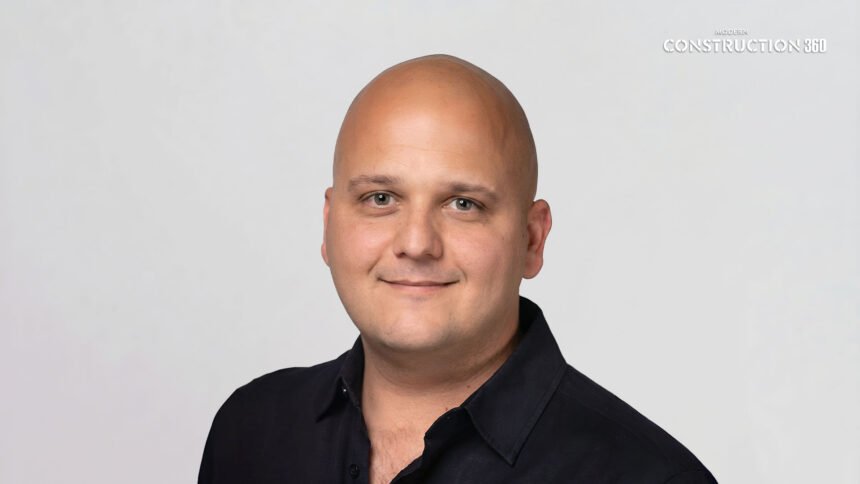
Kasper Rune Sogaard is the Founder and CEO of MagicDoor, an artificial intelligence-native property management software platform engineered to automate end-to-end real estate operations. A seasoned software engineer with an extensive background leading complex technical initiatives as a former Amazon software engineer with a core specialization in artificial intelligence, Sogaard occupies a unique intersection within the PropTech ecosystem. He possesses both the deep, programmatic domain expertise needed to build scalable AI infrastructure and the first-hand experience of a real estate investor who understands the daily friction points of property operations.
Under his leadership, MagicDoor has transitioned from an ambitious, bootstrapped architectural concept into a venture-backed enterprise disruptor. Sogaard is driving a philosophical shift away from passive, chatbot-centric automation toward active, system-wide execution, positioning MagicDoor as a key innovator in the modern property management landscape.
From Personal Friction to Global Innovation
The genesis of MagicDoor was not born out of a detached market analysis, but rather from personal frustration. As an active real estate investor managing his own expanding portfolio of properties, Sogaard encountered the stark operational limitations of existing software tools. He discovered that as his portfolio grew, the time required to manage day-to-day operations scaled exponentially rather than efficiently.
The “lightbulb moment” occurred when Sogaard realized that the available software platforms did nothing to actually execute work. They merely recorded that work had been done or provided a digital inbox for tasks that still required human labour to complete.
Seeing that independent landlords and small-to-medium operators were being entirely underserved by complex, enterprise-grade software that required dedicated IT management, Sogaard realized a fundamental truth: the industry did not need a better dashboard; it needed an autonomous workforce. Driven by the motivation to democratize institutional-grade operational efficiency for independent property operators, he leveraged his background in engineering to build an ecosystem where software acts as an active operator rather than a passive notebook.
Unifying the Pillars of Property Management
Founded in 2023 and headquartered in Las Vegas, Nevada, MagicDoor was architected from day one as an AI-native platform. Unlike legacy competitors that attempt to retroactively patch machine learning models onto outdated, decades-old codebases, Sogaard engineered MagicDoor’s core data architecture to support total vertical integration. The early execution phase focused intensely on consolidating the four pillars of property management into a single database:
- The Vacancy and Leasing Cycle: Automated marketing, listing distribution, AI applicant scoring, and tenant matching.
- Maintenance Operations: Real-time triage utilizing a proprietary smart system to prioritize and dynamically dispatch local vendors.
- Financial Accounting: Full general ledger capabilities, rent collection, automated payment reminders, and tax compliance tracking.
- Tenant Communications: Text-centric, multi-lingual messaging powered by the platform’s proprietary Communications Hub with real-time AI translation.
By establishing a unified data repository, MagicDoor ensured that its proprietary AI engines possessed complete contextual awareness across all operational channels. The company’s initial service rollout targeted independent landlords and small-to-mid-sized property operators, quickly establishing validation for its core value proposition: allowing property managers to scale their unit count without experiencing a corresponding increase in administrative overhead. To disrupt the legacy landscape further, Sogaard introduced an accessible, transparent pricing model, anchored by a starter plan at $2.00, a core advanced tier at $2.50 per active lease per month, and a comprehensive premium level at $4.95, stripping away hidden transaction premiums or minimum unit counts.
Capital Influx and Market Adoption
Navigating the early growth phases required MagicDoor to overcome deep-seated industry skepticism. The property tech sector is traditionally risk-averse, with operators hesitant to cede control of vital processes like vendor dispatching or tenant communications to automated systems. To counter this hurdle, Sogaard guided the engineering team to focus on building absolute transparency and control frameworks into the platform, allowing managers to set precise operational boundaries for the AI.
This strategic adjustment triggered exceptional market adoption, marked by up to a 5X boost in operational productivity and a 60% decrease in overhead costs for early users. The company’s rapid operational scale quickly drew substantial institutional venture backing. MagicDoor successfully secured over $2 million in pre-seed funding, followed by a highly competitive $4.5 million seed funding round co-led by Shadow Ventures and Okapi Venture Capital, with participation from Motley Fool Ventures, VITALIZE Venture Capital, and Early Light Ventures.
This total capitalization of $6.59 million successfully propelled the company’s trajectory into a verified Series A enterprise. As part of this growth phase, the company strengthened its governance by welcoming top-tier enterprise operators to its board of directors, including Jeff Bocan of Okapi Ventures, Matt Ohlman of Shadow Ventures, and Tim Sheehan, the co-founder and CEO of Greenlight.
The Open Architecture Philosophy
Sogaard’s core competence lies in his technical vision of a deeply integrated software architecture that remains “open at the boundaries.” In the modern software ecosystem, many companies mistake basic API connections for true integration. Sogaard recognizes that artificial intelligence thrives on comprehensive, unified data pools. When information is fragmented across disconnected systems, an AI model cannot draw meaningful insights or execute complex, end-to-end workflows.
MagicDoor’s definitive innovation is its capacity to cross-reference distinct datasets instantly to execute real-world tasks. When a resident submits a maintenance issue via text, the platform doesn’t just generate a notification ticket. The AI actively triages the severity of the issue, identifies and cross-references the property’s specific warranty details, checks historical vendor performance logs and pricing matrices, automatically dispatches the ideal local professional, and continuously updates the tenant in their preferred language.
By maintaining an open architectural boundary, Sogaard ensures that MagicDoor can seamlessly ingest and deploy new, advanced foundation AI models as they are released, guaranteeing that the platform’s capabilities evolve at the exact speed of broader technological innovation.
Execution and Velocity Over Bureaucracy
Within the corporate structure of MagicDoor, Sogaard fosters a culture anchored in engineering excellence, high operational velocity, and absolute transparency. As a technical founder, he disdains unnecessary administrative layers, preferring flat organizational structures that empower individual engineers and product managers to execute decisions rapidly. Sogaard emphasizes a product-first philosophy, where employee performance is measured by the tangible optimization and reliability of the code delivered to the end user.
He encourages a workplace culture that treats failure as an essential dataset for iterative improvement, provided that the organization learns from it rapidly. By keeping the corporate team tightly aligned with the direct, everyday realities of the property managers they serve, Sogaard ensures that MagicDoor avoids the common tech-startup trap of building abstract features that fail to solve practical, real-world user problems.
Redefining the Economic Parameters of Real Estate
Looking ahead, MagicDoor is positioned to scale its platform from a localized operational tool into a foundational piece of global real estate infrastructure. The company’s development roadmap focuses heavily on deepening its predictive analytics and expanding its automation boundaries. Future iterations of the platform aim to integrate advanced machine learning models capable of predicting property maintenance failures before they physically manifest, utilizing historical property data and structural IoT sensor inputs to optimize preventative asset management.
As independent property management scales globally, Sogaard’s vision is to establish MagicDoor as the definitive, autonomous operating system for real estate. By removing administrative friction from the property ecosystem, this evolution is not merely optimizing workflows; it is redefining the economic parameters of property ownership. For forward-thinking industry observers and the team here at Modern Construction 360, this shift represents a fundamental realignment of how physical assets are scaled, maintained, and made sustainable for the next generation of global landlords.