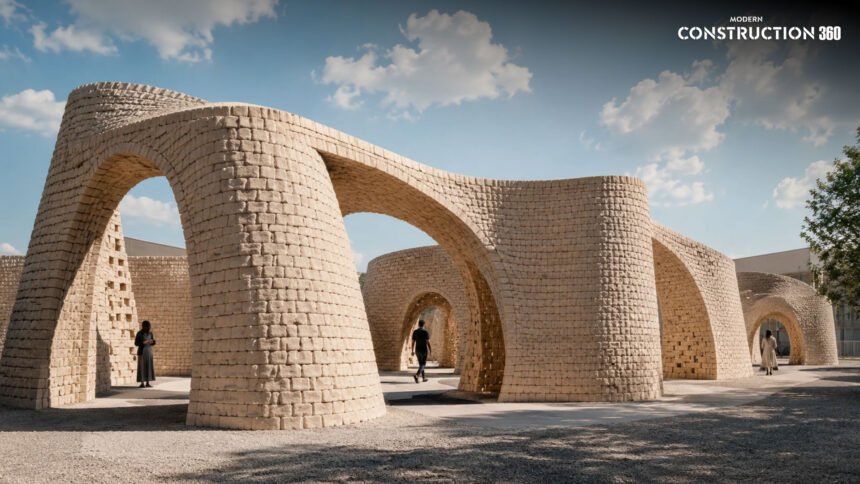
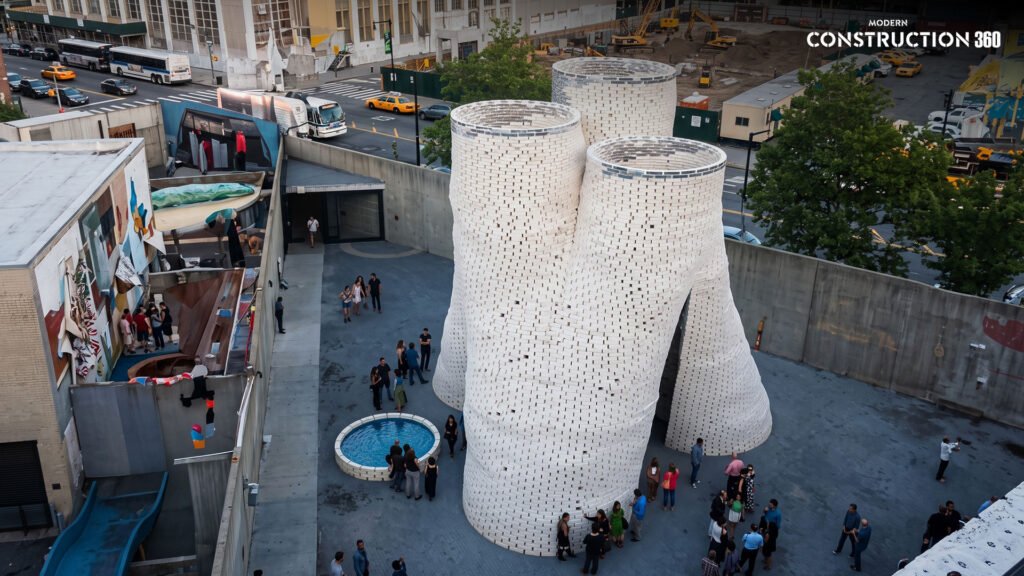
In 2014, a 40-foot tower went up in the courtyard of MoMA PS1 in New York. It wasn’t poured, welded, or trucked in on a flatbed. It was grown, from mushroom roots and corn stalks, stacked into a circular structure by a team that included the architecture firm ARUP. That tower, called Hy-Fi, is the reason most people have even heard of mycelium bricks today.
And here’s the thing: a decade later, we still haven’t figured out whether that tower was a glimpse of the future or a very elegant one-off.
Mycelium bricks belong to a broader category some in the industry call living building materials: bio-based products grown from fungi, bacteria, algae, and other organisms instead of mined, smelted, or synthesized. The pitch is obvious. Cement production alone accounts for roughly 8% of global CO₂ emissions; it’s the carbon-heavy ingredient that turns sand and gravel into concrete. If you could grow a load-bearing wall the way you grow oyster mushrooms, you’d be solving one of construction’s ugliest math problems. But “could” is doing a lot of work in that sentence, and it’s worth separating what these materials can genuinely do today from what’s still a lab demo with good PR.
What Are Mycelium Bricks Made Of?
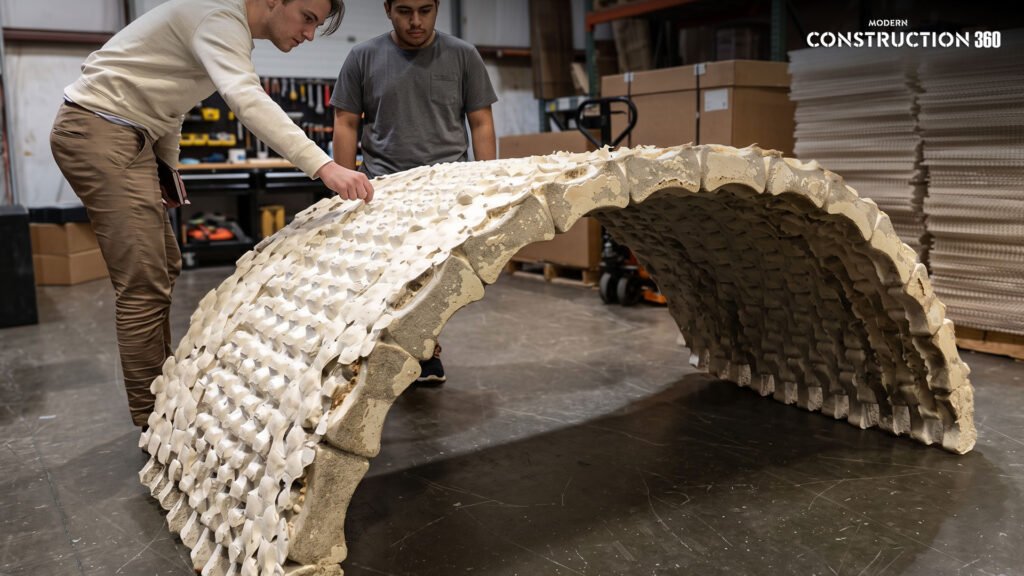
Mycelium bricks are made by growing fungal root networks, the thread-like hyphae that make up mycelium, through a substrate of agricultural waste like straw, sawdust, or husks, then baking the result to halt growth and lock in the shape.
The process itself is oddly low-tech. You take agricultural leftovers, the stuff that would otherwise get burned or dumped, and inoculate it with a fungal culture. Over the course of about a week, the mycelium spreads through the substrate the way roots spread through soil, weaving everything into a single dense mass. Growers pack that mixture into a mold, let it fill out, then throw it in an oven. The heat kills the fungus before it can sprout mushrooms and turns the block into something stable enough to handle.
What you end up with is genuinely strange as a material. It’s lighter than you’d expect. And because two mycelium bricks placed next to each other will actually knit themselves together if the conditions are right, you don’t always need traditional mortar; the fungus does the bonding for you.
Are Mycelium Bricks Strong Enough to Build With?
Not for load-bearing walls in a typical building, not yet. Mycelium bricks currently perform well as insulation, partitions, and temporary structures, but they lag well behind concrete and steel in compressive strength, and building codes don’t yet have standards for fungal-based materials.
That’s not a small caveat. It’s the caveat. The Hy-Fi tower worked because it was a temporary installation with generous safety margins, not a wall holding up a second floor. Researchers have pushed further since then; the MycoTree project shown at the 2017 Seoul Biennale demonstrated mycelium in compression-only configurations, which is a clever way to work around the material’s weaknesses rather than solve them outright.
The Durability Problem Nobody’s Solved Yet
Here’s a point where the sourcing itself is worth being upfront about: you’ll find claims going both ways on mycelium and water. Some commercial write-ups describe dried mycelium as resistant to water and mold. The more technical sources, a structural engineering firm and a peer-reviewed review of mycelium composites, say the opposite: mycelium is water-sensitive, and its performance in humid or soil-contact environments is limited without protective treatment. The stronger evidence sides with sensitivity, so treat “waterproof mycelium” marketing claims skeptically until a product specifies its actual sealing and testing.
Under stable, controlled conditions, a mycelium brick might last around 20 years. Outside those conditions? Nobody’s really tested it at scale over decades, because the material hasn’t existed commercially at scale for decades.
None of that makes mycelium a dead end. It makes it an early-stage material doing early-stage-material things: performing brilliantly in narrow applications while structural engineers keep chipping away at the harder problem.
Are Mycelium Bricks Fireproof and Soundproof?
Mycelium bricks are commonly marketed for fire resistance, and their dense, fibrous structure plausibly supports some acoustic dampening; Mogu, for instance, sells a dedicated mycelium-based acoustic tile line, which signals real commercial demand for the material in sound-control applications. That said, independent, standardized performance data (specific fire ratings, decibel reduction figures) is thin across the industry, so treat specific numbers on a product label as more reliable than general claims about the material.
Beyond Bricks: The Wider World of Living Building Materials
Mycelium isn’t the only organism getting recruited into construction. If you want a sense of where living building materials are headed as a category, look at self-healing concrete, bacteria-infused concrete that repairs its own cracks.
Self-Healing Concrete’s Bacteria Trick
The mechanism is almost absurdly elegant. Bacillus bacteria, capable of lying dormant for years, get mixed into the concrete alongside a food source like calcium lactate. When a crack forms and water gets in, it wakes the bacteria up. They feed, and as a byproduct, they produce calcium carbonate, essentially natural limestone, which fills the crack from the inside out. Some published trials report crack closure rates as high as 95%, though that figure comes from industry commentary rather than the peer-reviewed literature, which supports the underlying mechanism without confirming this specific number.
Companies like Kryton International already distribute bio-concrete components to professional builders, though you still can’t grab a pre-mixed bag off a shelf at your local hardware store. At least one regional concrete supplier’s own commentary puts full commercial rollout at two to five years out, worth treating as one company’s forecast rather than an industry-wide timeline.
Algae, Chitin, and the Other Organisms Joining the Job Site
Fungi get most of the headlines, but they’re not working alone. Algae is increasingly processed into bioplastic polymers as a stand-in for petroleum-based plastics; designer Charlotte McCurdy made the point vividly in 2019 with a raincoat built entirely from algae-derived biopolymers, later expanding the idea into a sequined dress. Researchers are now looking at seaweed specifically for biomasonry, since algae photosynthesis pulls carbon out of the atmosphere as it grows, meaning the raw material itself functions as a small carbon sink before it’s even turned into anything.
Then there’s chitin, the same fibrous substance that forms crab shells and fungal cell walls, and the second-most abundant biopolymer on the planet after cellulose. It’s promising, but the extraction process is difficult and expensive, which keeps commercially available chitin products like chitosan on the pricier end.
On the product side, this is already showing up in real interiors. Biohm’s Edge insulation panel harnesses mycelium’s root structure for humidity and temperature regulation while staying fully compostable. Mogu sells Floor and Acoustic tile collections built on mycelium core-boards finished with bio-based resins made from spent coffee grounds, rice straw, and discarded seaweed, proof that “living material” doesn’t have to mean “science fair project.” These are commercially sold products, not concept renderings.
Can You Actually Buy Mycelium Bricks Right Now?
You can buy some mycelium-based products commercially: packaging, insulation panels, acoustic tiles, and leather-like materials for fashion, but structural mycelium bricks for home construction remain largely at the pilot and demonstration stage, not something available through standard building suppliers.
This is where honesty about sourcing matters more than optimism. Ecovative, one of the biggest names in the space, reached commercial-scale manufacturing for some of its mycelium products in 2024 and now runs production farms in New York and Pennsylvania. That’s real, verifiable commercial activity, not vaporware. But MycoWorks, another prominent mycelium materials company known for its leather-like Reishi product, became insolvent in late 2025; its intellectual property was later acquired by a private equity fund that formed a new entity in 2026. That’s the honest state of this industry right now: genuine progress sitting right next to genuine financial failure, sometimes in the same product category.
If you’re a builder or homeowner actually shopping for materials today, mycelium insulation panels, acoustic tiles, and interior cladding are closer to real options than structural mycelium bricks. Anything sold to you as a mycelium “brick” for load-bearing construction deserves a hard second look, and a question about which building code, if any, it’s certified under.
Is Mycelium the Future of Sustainable Building, or Just a Nice Idea?
Probably both, depending on which part of your house you’re talking about. As insulation, acoustic paneling, packaging fill, or interior cladding, mycelium bricks and their living-material cousins, algae bioplastics, bacteria-laced concrete, chitin composites, are already earning their place: cheap to grow, genuinely biodegradable, and built from waste that would otherwise go nowhere useful. As a replacement for the studs and foundation holding your roof up? That’s still a research problem, not a shopping decision.
Concrete has had roughly two thousand years of iteration behind it, going all the way back to the Romans. Mycelium’s had about a decade of serious commercial attention. Maybe the fairer question isn’t whether mushrooms can replace concrete; it’s what an entire building industry looks like once we stop assuming materials have to be dead to be dependable.