A young architect once traveled to West Africa on a fellowship that changed the way he thought about design. Instead of seeing architecture as just buildings, he began to understand how climate, culture, and everyday life shape the spaces people use. That experience later influenced the philosophy of a firm that would grow into one of the world’s largest architecture and interior design companies. That firm is Perkins&Will.
Today, Perkins&Will is recognized for designing hospitals, schools, workplaces, transportation hubs, residential communities, and public spaces across the globe. The company has also built a strong reputation for sustainable design, research, and innovation. Instead of following changing trends, Perkins&Will has consistently focused on creating buildings and interiors that serve people while respecting the environment. This approach has earned the firm international recognition and made it one of the most respected names in the architecture and design industry.
A Strong Foundation That Began in Chicago
Perkins&Will was founded in Chicago in 1935 by architects Lawrence B. Perkins and Philip Will Jr. The two founders shared a vision of creating practical, thoughtful architecture that could improve everyday life. During its early years, the firm concentrated on educational buildings and public projects, gradually earning the trust of clients through quality work and long-term relationships. As the company grew, it expanded beyond traditional architectural services. It introduced interior design, planning, urban design, landscape architecture, branded environments, and research into its portfolio. This steady expansion allowed Perkins&Will to provide complete design solutions instead of focusing on only one area of expertise.
Today, the company operates as a global multidisciplinary design practice with studios across North America, Europe, Asia, the Middle East, and other regions. Its projects range from universities and hospitals to corporate headquarters, airports, laboratories, residential developments, and civic buildings. According to the company, its mission remains centered on designing places where people live, work, learn, play, and heal. The firm’s growth has never changed its original purpose. Instead, every new service has supported its goal of creating better environments for people and communities.
Living Design Became the Company’s Guiding Philosophy
One of the defining features of Perkins&Will is its design philosophy known as Living Design. Rather than treating architecture as the creation of attractive buildings alone, the company believes that every design decision should improve human health, well-being, resilience, and environmental performance. This philosophy influences projects from the earliest planning stages through construction and interior design. Architects, planners, interior designers, and researchers work together to understand how buildings affect the people who use them every day. The result is a design process that considers comfort, accessibility, flexibility, sustainability, and long-term performance alongside appearance.
Living Design also reflects the firm’s belief that architecture should respond to changing social and environmental needs. Whether designing a workplace that supports employee well-being or a hospital that promotes healing, Perkins&Will aims to create spaces that deliver measurable benefits instead of only visual appeal. This people-first approach has become one of the main reasons clients continue to choose the firm for complex projects around the world.
Steady Growth Built a Global Company
Perkins&Will did not become an international design firm through rapid expansion alone. Instead, it grew over many decades by opening new studios, strengthening its expertise, and forming strategic partnerships that complemented its existing capabilities. A major milestone came in 1986 when Perkins&Will became part of Dar Al-Handasah, one of the world’s leading international design and engineering organizations. The partnership gave Perkins&Will access to a broader global network while allowing the firm to continue operating under its own name and design philosophy.
During the following decades, the company expanded into new regions and added specialists in workplace design, transportation, planning, healthcare, sustainability, and interior architecture. Rather than growing for size alone, Perkins&Will focused on building expertise across many different sectors. The company continued this strategy in September 2024 when workplace architecture and interior design firm HYL joined Perkins&Will. The merger strengthened the firm’s workplace design capabilities and expanded its presence in Washington, D.C. It also reflected Perkins&Will’s ongoing strategy of bringing together firms with complementary expertise to better serve clients. This long-term approach has helped Perkins&Will maintain consistent growth while adapting to changing market demands and new design challenges.
Research Has Become Part of the Company’s Identity
Perkins&Will has long believed that successful design should be supported by research as well as creativity. This commitment has helped distinguish the firm from many traditional architecture practices. In 2009, the company introduced what it describes as the architecture industry’s first peer-reviewed research journal. The publication encouraged architects and designers to use evidence-based research when developing projects instead of relying only on experience or design trends.
Over time, Perkins&Will expanded its research efforts through dedicated research teams and initiatives focused on healthier buildings, material transparency, environmental performance, and occupant well-being. These efforts have helped the company better understand how architecture affects people’s physical and mental health. The firm’s research culture also supports innovation across many project types. Hospitals benefit from studies on patient recovery, workplaces draw from research on employee productivity, and educational buildings incorporate findings about learning environments. This evidence-based approach has become one of the company’s strongest competitive advantages.
Sustainability Remains at the Core of Every Project
Environmental responsibility has become one of Perkins&Will’s defining strengths. Long before sustainability became a common industry goal, the company was already exploring ways to reduce environmental impact through better design. Today, sustainability is integrated into nearly every project through the Living Design philosophy. Perkins&Will encourages the use of healthier building materials, energy-efficient systems, resilient planning, and environmentally responsible construction practices. Rather than treating sustainability as an optional feature, the company considers it an essential part of creating successful buildings.
The firm’s commitment extends beyond client projects. Over the years, Perkins&Will has introduced several initiatives that support healthier materials, climate resilience, and environmental transparency within the design industry. In 2024, the company also published its first Environmental, Social, and Governance (ESG) Report, highlighting its long-term commitment to responsible business practices. This focus on sustainability has helped Perkins&Will build strong relationships with organizations seeking buildings that deliver long-term value while reducing environmental impact.
A Company That Continues to Evolve
Nearly nine decades after its founding, Perkins&Will continues to expand its capabilities while remaining true to its original purpose. The firm combines architecture, interior design, planning, landscape architecture, research, and sustainability into a single integrated practice that serves clients across many industries.
Its steady growth reflects careful planning rather than rapid expansion. Every major milestone, from joining Dar Al-Handasah to welcoming HYL into the company, has strengthened its ability to deliver complex projects around the world. As the architecture industry continues to evolve, Perkins&Will remains focused on creating buildings and interiors that improve people’s lives. That commitment has shaped the company’s past and continues to guide its future.
Industry Recognition Reflects Years of Design Excellence
Perkins&Will has earned recognition from many of the architecture and design industry’s most respected organizations. Its awards reflect excellence across architecture, interior design, sustainability, healthcare, education, and workplace design rather than success in just one area. One of the firm’s most significant achievements came in 2010 when the National Building Museum presented Perkins&Will with its Honor Award. The museum recognized the firm’s long-standing commitment to socially responsible design, public service, and creating buildings that improve communities. It was a landmark achievement that highlighted the company’s influence beyond architecture alone.
The firm’s leadership in sustainable design has also received international recognition. In 2022, Metropolis named Perkins&Will Planet Positive Firm of the Year, acknowledging its work in advancing climate action and social responsibility across the design industry. A year later, Architizer recognized the company as the Best Sustainable Firm for its continued commitment to environmentally responsible architecture and design. Recognition has continued through the company’s project work. Perkins&Will’s official 2024 Design Awards Recap highlights awards across healthcare, education, workplace, civic, and interior design projects. During 2025, the company also announced multiple national design honors, including five American Institute of Architects (AIA) National Awards, while several projects received recognition from leading design organizations. These achievements demonstrate the firm’s ability to deliver high-quality work across many building types and regions.
Interior Design Is One of the Firm’s Greatest Strengths
Although Perkins&Will is widely known for architecture, interior design has become one of its defining strengths. The company approaches interiors as an essential part of the overall user experience rather than treating them as a separate service. Its interior designers work alongside architects, planners, landscape architects, and researchers from the beginning of each project. This collaborative process helps create spaces that are functional, comfortable, visually appealing, and responsive to the needs of the people who use them every day.
The firm’s expertise covers workplace interiors, healthcare environments, educational spaces, hospitality, laboratories, civic buildings, and mixed-use developments. Many of these projects have received recognition from respected organizations such as the International Interior Design Association (IIDA), Interior Design magazine, and other leading industry award programs. The 2024 merger with HYL further strengthened Perkins&Will’s interior architecture practice. HYL was widely recognized for its workplace strategy and interior architecture projects, particularly in the corporate and legal sectors. Bringing the two firms together expanded Perkins&Will’s design capabilities while reinforcing its commitment to creating healthy, high-performing workplaces.
CEO Phil Harrison Has Led Perkins&Will Through a New Era
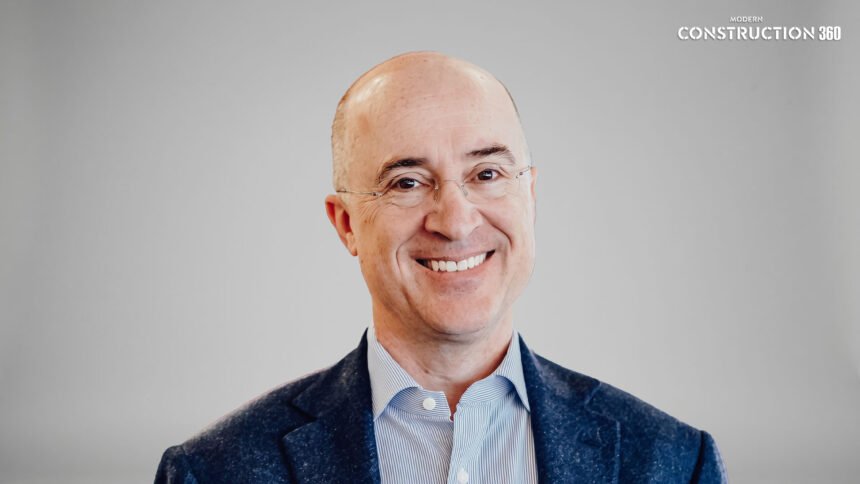
Philip L. Harrison, better known as Phil Harrison, serves as Principal and Chief Executive Officer of Perkins&Will. His career reflects decades of leadership within the company rather than an appointment from outside the organization. After completing his education, Harrison joined Perkins&Will in 1993 as an architect. Over the years, he worked on projects across the education, healthcare, science, and corporate sectors while taking on increasing leadership responsibilities. His broad project experience gave him a deep understanding of both design excellence and business strategy. In 2006, Harrison became President and Chief Executive Officer of Perkins&Will. According to the company, he has led the firm through a period of remarkable growth, tripling its size, expanding its international presence, and strengthening its reputation for design excellence, research, and sustainability.
Harrison’s educational background combines creativity with technical knowledge. He earned a Bachelor of Arts in Visual Arts and Philosophy from Harvard College before completing a Master of Architecture at the Harvard Graduate School of Design. During his graduate studies, he received the AIA School Medal, one of the highest academic honors awarded to architecture students. He is also a licensed architect in nine U.S. states and two Canadian provinces. His leadership philosophy emphasizes collaboration, innovation, and continuous learning. Perkins&Will credits him with encouraging a culture where research, technology, creativity, and environmental responsibility work together to improve both design quality and client service. Under his leadership, the company has continued investing in evidence-based design, healthier buildings, sustainable practices, and multidisciplinary collaboration, helping Perkins&Will remain one of the world’s leading architecture and design firms.
Continuing a Legacy of Innovation
The architecture and interior design industry continues to evolve as clients seek buildings that are healthier, more sustainable, and better suited to changing ways of living and working. Perkins&Will has positioned itself to meet these expectations through its integrated approach to architecture, interior design, planning, research, and sustainability. The company’s steady growth, strategic partnerships, and continued investment in innovation demonstrate that it is preparing for future challenges rather than relying on its long history alone. Recent initiatives, including the publication of its first ESG Report, new international studios, and expanded interior design capabilities, show that the firm continues to evolve while staying true to its original mission.
For nearly nine decades, Perkins&Will has shown how thoughtful design can create lasting value for people and communities. From its beginnings in Chicago in 1935 to its position as a globally respected architecture and interior design firm, the company has built its reputation through innovation, research, sustainability, and consistent design excellence. Its verified achievements, strategic growth, and award-winning projects demonstrate that success comes from balancing creativity with responsibility. Under the leadership of Phil Harrison, Perkins&Will has continued to strengthen its global presence while maintaining a clear focus on people-centered design and environmental stewardship.
As cities, workplaces, healthcare facilities, and educational institutions continue to change, Perkins&Will remains well positioned to shape the next generation of architecture and interior design. Its journey offers valuable lessons for the design industry, proving that long-term success comes from combining vision with continuous improvement. At Modern Construction360, we closely follow companies that influence the future of architecture, interiors, and the built environment. Perkins&Will stands out as a strong example of how a design practice can grow over generations while staying committed to innovation, sustainability, and creating spaces that positively impact everyday life.