Commercial real estate is experiencing its most volatile period in a century. Following the structural shift toward hybrid work, nationwide office utilization rates dropped by nearly 50%. Despite this fundamental transformation in how teams work, the mechanisms for securing, managing, and leasing office space remain stubbornly tethered to a pre-digital era. The traditional commercial leasing cycle takes anywhere from three to six months, demands multi-year structural commitments, and depends on fragmented, commission-driven networks.
For fast-growing startups and agile mid-sized enterprises, this friction is more than an inconvenience; it is a capital-allocation bottleneck. Forward-thinking executive teams cannot accurately project their physical headcount three to five years into the future, yet legacy real estate frameworks force them to sign rigid, long-term contracts. The industry is in dire need of structural modernization. Tandem, an innovative, AI-native property technology platform backed by Y Combinator, stepped into this void to rebuild the corporate leasing model from scratch. By converting a complex, months-long transaction into a streamlined, tech-enabled onboarding process, the platform allows businesses to source, negotiate, and move into ideal office spaces in less than 14 days.
The Velocity Deficit and Information Silos
The systemic inefficiencies within commercial real estate stem from a fundamental misalignment between modern workplace requirements and legacy transactional friction. Traditional commercial leasing operates on a slow, opaque, and highly localized model. This legacy approach exposes corporate tenants to several core operational inefficiencies:
- Information Asymmetry and Siloed Inventory: Real estate listings are heavily fragmented across private broker networks, unverified digital databases, and off-market opportunities. Tenants lack a single, comprehensive source of truth to view entire market inventories, forcing them to rely on individual brokers who only present a curated, self-serving subset of options.
- The Velocity Deficit: Sourcing an office, validating pricing, coordinating tours, exchanging drafts, and finalizing lease terms typically takes 90 to 180 days. For early-stage and high-growth companies, this timeline is unacceptably slow.
- Misaligned Broker Incentives: Traditional transactional real estate relies on commission-based models where tenant brokers are compensated based on a percentage of the total lease value. This structural dynamic disincentivizes brokers from negotiating lower rent or advocating for shorter, highly flexible lease structures.
- The Rigidity Penalty: Landlords naturally prefer five-to-ten-year commitments to secure predictable cash flows and satisfy traditional institutional lenders. However, modern corporate operations require high adaptability. Forcing an expanding team into a fixed five-year lease results in massive capital waste through unutilized square footage or premature, costly lease-breaking penalties.
The Stanford, Bain, and Proptech Confluence
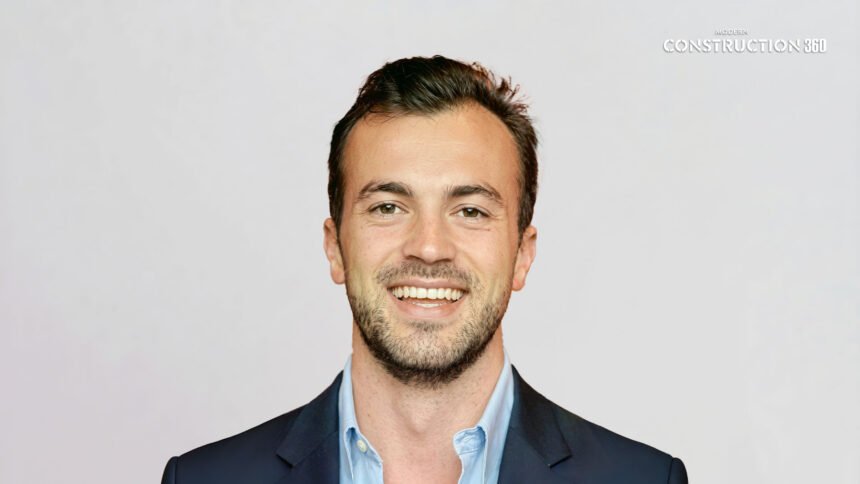
Rafi Sands is the Co-founder and CEO of Tandem, a tech-driven marketplace engineered to optimize commercial real estate transactions for modern distributed and hybrid teams. Sands brings a distinct cross-disciplinary background to the real estate technology sector, combining classical management consulting rigor with deep operational experience at high-growth technology platforms.
Sands built his foundational strategic analytical toolkit at Bain & Company as a Senior Associate Consultant, served as a Product Portfolio Analyst at ChargePoint, handled business development at Pano, and later earned an MBA from the Stanford Graduate School of Business. Through this work, he developed a clear expertise in decomposing highly regulated, complex, and legacy institutional value chains into scalable workflows. As CEO of Tandem, Sands applies this precise philosophy to commercial real estate. Alongside co-founders Brendan Suh (COO) and Sean Miller (CTO), Sands has transitioned from traditional tech optimization to active market disruption.
Demolishing the Real Estate Inertia
Sands’ motivation to launch Tandem came from a firsthand look at the massive gap between modern corporate execution speeds and real estate inertia. While spending two years at Stanford researching the post-pandemic evolution of the office market after COVID under noted economics professor Nick Bloom, Sands gained unmatched access to real-time micro-data. He watched enterprise executive teams scale product lines, raise multi-million-dollar capital rounds, and double their headcount in a single quarter, only to stall completely when trying to secure a physical workspace.
The true lightbulb moment arrived when analyzing this data. While macro analysts focused heavily on the absolute decline in urban office occupancy, Sands identified a deeper structural mismatch: the issue wasn’t that teams no longer wanted to collaborate in person, but rather that the financial and operational mechanisms required to establish an office were completely incompatible with modern corporate agility. The traditional real estate playbook required early-stage leadership teams to predict their exact physical footprint five years out. Sands recognized that treating office space as a rigid utility instead of a dynamic, on-demand service was actively stifling economic growth and organizational velocity. This realization drove him to build a platform that aligns commercial real estate with the operational pace of high-growth technology companies.
From Bay Area Beta to Enterprise Standard
Founded in early 2023, Tandem was designed around a clear operational thesis: finding, leasing, and moving into an office space should match the speed and ease of modern software deployment. To prove this model, Sands and his team initially focused on dense, high-velocity corporate ecosystems like San Francisco and New York City, where the concentration of hybrid tech firms and unutilized office inventory was highest.
The team built an initial marketplace that brought unprecedented transparency to off-market corporate real estate assets. By working directly with progressive landlords and enterprise companies holding excess real estate portfolios, Tandem unlocked high-quality, plug-and-play spaces that were previously invisible to traditional brokerage channels. The value proposition immediately resonated with the market: tenants gained access to beautifully built-out spaces without capital-intensive construction costs, while landlords began recovering yield on unutilized real estate assets. Within months of its initial rollout, the platform proved its concept by successfully processing more than $1 million in rent for its early cohorts.
Monetizing Vacancy and the YC Accelerator
Building a marketplace platform in a legacy industry during a major macroeconomic correction presents serious operational hurdles. Commercial real estate is naturally risk-averse, built on entrenched relationships and long-standing legal frameworks. Sands and his leadership team had to overcome deep skepticism from traditional institutional landlords who viewed flexible, short-term lease models as a threat to underlying property valuations.
To overcome this structural resistance, Tandem shifted the conversation from speculative risk to data-backed yield optimization. The platform proved that automated verification, standardized digital leasing contracts, and streamlined tenant underwriting vastly reduced friction and vacancy periods. This approach consistently generated higher net effective rent per square foot compared to letting spaces sit empty, waiting for rare multi-year tenants.
This strategic shift unlocked massive institutional growth. Following its participation in Y Combinator’s Summer 2024 batch, Tandem secured a $6.1 million seed funding round anchored by prominent technology investors including 1984 Ventures, Soma Capital, and Collide Capital, alongside strategic backing from Stanford professor Nick Bloom. This cash injection allowed the platform to scale its engineering teams and expand its market footprint across premier metros. Today, the company processes millions in annualized rent through its automated transactional framework, serving a rapidly expanding roster of over 500 corporate tenants, including fast-growing tech pacesetters like Writer AI and Norm AI.
The Unbiased Advisor Architecture
Sands’ market vision centers on treating commercial real estate as a fluid, responsive software service layer rather than a static asset class. At the heart of Tandem’s competitive advantage is a complete overhaul of traditional real estate data management and deal structures:
- Comprehensive Market Aggregation: Tandem eliminates the need for fragmented broker searches by unifying direct landlord listings, traditional broker options, and highly coveted off-market corporate spaces into a single, fully searchable digital index.
- Automated Document and Workflow Optimization: By using an AI co-pilot framework to standardize and automate space matching, tour scheduling, and lease drafting, Tandem compresses traditional multi-month negotiation timelines down to single-digit days.
- The Unbiased Advisor Architecture: Next-generation real estate advisory requires complete alignment. Unlike traditional commission-driven brokers, Tandem’s advisory team operates on a salaried model. This structural choice ensures that tenant advisory services focus entirely on client utility, price optimization, and flexible term execution, rather than chasing inflated lease values.
- Frictionless Transaction Execution: The platform unifies the entire discovery-to-occupancy pipeline, combining live real estate intelligence with post-signature logistical support for vendors, moving, and workspace onboarding.
Eliminating Commission Bias
Sands runs Tandem with an execution-focused, highly collaborative corporate philosophy built on radical transparency and high personal accountability. An avid long-distance runner who has completed 20 marathons, Sands is famously a former Guinness World Record holder for the “Fastest marathon dressed as a traffic cone (male),” which he completed in 3 hours, 45 minutes, and 25 seconds to advocate for urban pedestrian and cyclist safety. This background infuses his leadership style with the same grit, endurance, and disciplined pacing required for ultra-endurance athletics. He has intentionally eliminated the slow, multi-layered hierarchies typical of traditional real estate organizations.
At Tandem, information flows freely. The engineering, product, and real estate operations teams share a single, unified view of customer interactions and transactional bottlenecks. Sands encourages an experimental, product-led culture where team members are expected to build, test, and iterate on new platform features based on direct user data and feedback. By replacing traditional real estate commission structures with salaried, equity-aligned compensation models, Sands has built an internal culture focused squarely on long-term client trust and platform integrity rather than short-term transactional volume.
Real Estate as an On-Demand Software Service
As enterprise organizations continue to re-evaluate their physical footprints, the demand for clear, rapid, and flexible workplace deployment models is set to scale exponentially. Under Sands’ leadership, Tandem is positioned to transform from a regional workspace marketplace into the foundational transactional operating system for modern commercial real estate.
The company’s growth roadmap focuses on deeper tech integration and geometric geographic expansion. Tandem is actively enhancing its predictive matching capabilities to help growing enterprises automatically forecast, provision, and re-balance their physical office footprints across multiple metropolitan hubs in real time. As traditional multi-year corporate leases expire globally over the coming years, Tandem’s tech-first, highly responsive approach stands ready to capture the structural shift toward agile real estate. Sands is not merely building a real estate discovery tool; he is establishing a new standard for how modern corporations interact with physical space.
The evolution of platforms like Tandem highlights a broader truth currently being tracked by the editorial team at Modern Construction 360: physical space is no longer a static asset, but a dynamic resource that must evolve alongside the technology driving it. Whether looking at the automation of structural building processes or the digitalization of commercial leasing workflows, the built environment is moving toward unprecedented efficiency. Watching pioneers like Rafi Sands dismantle decades of transactional friction offers a compelling blueprint for how modern enterprises will locate, build, and operate their physical footprints in the decade to come.