Across the United States, commercial real estate owners face an invisible, everyday drain on resources that quietly consumes massive amounts of electricity and inflates operational budgets. Heating, ventilation, and air conditioning systems run constantly to keep office towers, schools, and hospitals comfortable, yet they operate under a fundamental design flaw that has gone largely unchallenged for decades. Traditional air conditioners do not just cool indoor spaces; they attempt to handle humidity and temperature simultaneously through brute force, overcooling the air simply to squeeze out moisture.
This inefficient approach wastes billions of kilowatt-hours annually, pushing utility grids to their limits and driving up carbon emissions. Transforming this outdated framework requires more than minor tweaks to existing machinery; it demands a complete reimagining of how air moves, interacts, and gets conditioned inside modern structures.
The Hidden Cost of Indoor Humidity
The core challenge plaguing commercial HVAC systems stems from the physics of moisture control. For generations, keeping indoor environments comfortable meant passing warm, humid air over ice-cold metal coils, forcing water vapor to condense so the air could dry out before circulating through a building. This process forces air conditioning compressors to work overtime, consuming enormous amounts of electricity just to combat humidity. In humid regions across the United States, this single inefficiency accounts for a staggering share of commercial energy consumption, straining building budgets and complicating corporate sustainability goals.
Legacy equipment offers little relief, as traditional dehumidification requires bulky setups, heavy power draws, and constant maintenance, leaving property managers trapped between soaring energy bills and strict environmental regulations.
A Pioneer From Beyond the Atmosphere
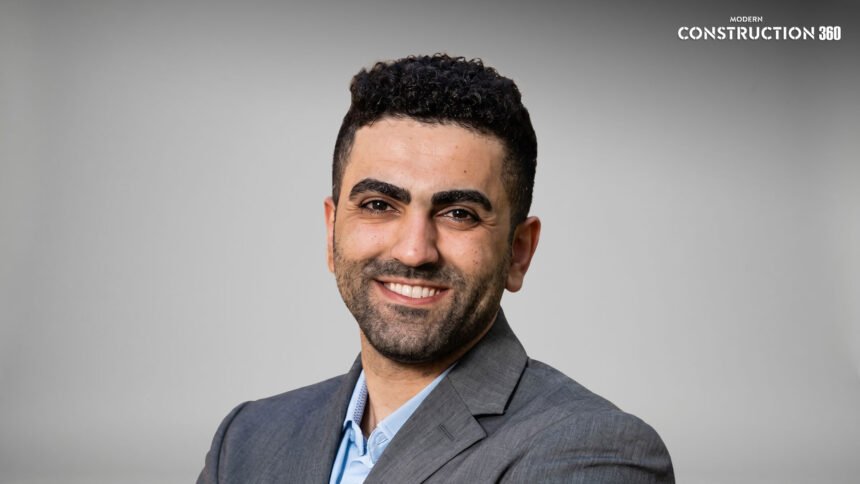
Enter Dr. Rawand Rasheed, a mechanical engineer whose journey to transforming terrestrial real estate began far above the Earth’s surface. Earning his Ph.D. in Mechanical Engineering from Rice University, Dr. Rasheed spent over five years at the NASA Johnson Space Center as a graduate research fellow and Life Support Systems Engineer. In that demanding environment, failure was not an option, and resource efficiency meant the difference between survival and disaster in space. While at NASA, he focused on critical thermal-fluid systems, developing advanced technologies for spacecraft water recovery, carbon dioxide scrubbers, and astronaut respirators.
His exceptional work yielded multiple patents and top-tier academic publications, laying the technical groundwork for what would eventually become a major leap forward in climate technology.
The Space-Age Catalyst for Earth
The lightbulb moment for Dr. Rasheed occurred while studying fluid dynamics and aerosolized liquid-gas interactions for aerospace life support. He realized that the advanced separation mechanics required to clean air, manage fluids, and handle extreme microgravity constraints could solve one of the most stubborn energy problems back on Earth. Instead of accepting that air conditioning had to be a massive energy sink, he envisioned a system that could separate humidity from cooling entirely. This insight inspired the creation of the Helix MICRA technology, a compact, highly efficient apparatus designed to capture moisture instantly using precision-engineered helical channels.
Driven by the desire to apply his aerospace expertise to widespread environmental challenges, he co-founded Helix Earth to bring space-grade climate control down to commercial rooftops.
Grounding Innovation in Commercial Real Estate
Launching Helix Earth out of the academic environment required translating complex aerospace engineering into a practical, scalable product for building owners. Working alongside experienced entrepreneurial leaders, Dr. Rasheed guided the company through its early execution phase, focusing on retrofit solutions that could easily integrate with existing commercial rooftop air conditioning units without requiring a complete system overhaul. By introducing liquid desiccants paired with specialized helical separation channels, the startup engineered a system that strips moisture out of incoming air before it ever reaches the cooling coils. This elegant approach allows air conditioners to handle temperature reduction independently, slashing overall energy use by a substantial margin while drastically improving indoor air quality.
Navigating Growth Through Technical Excellence
Scaling a hardware-focused climate tech company brings unique hurdles, from securing capital to proving reliability in real-world conditions. Rather than buckling under macroeconomic pressures, Helix Earth leaned into rigorous testing and strategic fundraising, securing substantial backing from venture capital firms and non-dilutive grants from agencies like the National Science Foundation and the Department of Energy. Major milestones, including significant funding rounds and high-profile industry accolades such as winning prestigious pitch competitions, validated the company’s market potential.
These financial injections enabled the team to expand manufacturing capabilities, broaden their market footprint across the United States, and position their hardware as an essential tool for property owners striving to meet stringent energy efficiency standards.
Engineering a Smarter Standard for Efficiency
At the heart of Helix Earth’s success is a unique blend of deep scientific rigor and practical market alignment. While legacy competitors rely on slow-moving membranes, thin films, or structured packings, Dr. Rasheed and his team tackle the root cause of energy waste by accelerating mass transfer through proprietary physics and liquid-gas chemistry. Their hardware functions with minimal energy draw, ensuring durability, low maintenance, and seamless operation. This technical differentiation sets the company apart in a crowded marketplace, offering commercial real estate operators a reliable path to lower utility expenses, reduced carbon footprints, and compliance with modern building codes without blowing their capital expenditure budgets.
Leading With Purpose and Precision
Inside the corporate walls of Helix Earth, Dr. Rasheed cultivates a culture defined by intellectual curiosity, relentless problem-solving, and collaborative innovation. Drawing from his background in high-stakes aerospace engineering, he encourages his team to question conventional assumptions and approach climate challenges with rigorous first-principles thinking. His leadership style balances scientific precision with an approachable, mission-driven demeanor, empowering engineers and business strategists alike to take ownership of ambitious goals. By fostering an environment where bold ideas are tested against strict scientific standards, he ensures that the company remains agile, transparent, and deeply committed to its core environmental mission.
Shaping the Future of Sustainable Infrastructure
Looking ahead, Helix Earth is poised to redefine how commercial buildings interact with their surrounding environments. With a clear roadmap focused on scaling manufacturing and expanding commercial deployments across the United States, the company stands at the forefront of the green building revolution. By bridging the gap between outer space engineering and terrestrial utility, Dr. Rasheed has built more than just a successful startup; he has established a new benchmark for how technology can solve foundational environmental inefficiencies. As property developers and engineers at Modern Construction 360 continue to design the next generation of smart facilities, integrating breakthrough hardware like this will likely become the standard for achieving true environmental and financial sustainability.