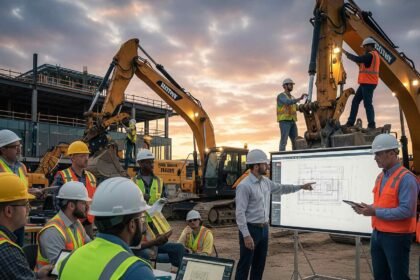
The construction industry, a foundational pillar of the American economy, has long been plagued by a paradox: while it builds the future, it often relies on processes rooted in the past. Massive infrastructure projects, complex data centers, and sprawling healthcare facilities frequently struggle with the simple reality of visibility. When thousands of workers occupy a single site, knowing exactly who is where, whether they are trained, and how safely they are operating becomes an impossible task for manual management. This is the friction point where Sitemetric enters the story, not merely as a service provider, but as a technological catalyst for a new era of construction. By bridging the gap between physical jobsite chaos and digital clarity, Sitemetric is fundamentally changing how major projects across the United States are delivered.
The Blind Spots of Heavy Industry
Before the rise of modern construction intelligence, site management was an exercise in fragmented information. General contractors and owners were often forced to rely on paper-based check-ins, manual logs, and siloed communication methods. This lack of real-time data created a ripple effect of inefficiencies. If an emergency occurred, locating every worker in real time was a daunting task. If training certifications expired, they were often missed until it was too late. These are not just minor inconveniences; they are massive liabilities that lead to project delays, ballooning budgets, and, most importantly, safety risks. In an industry where time is quite literally money, the inability to see the jobsite in its entirety meant that the largest, most critical projects in the country were operating with significant blind spots.
A Tech Veteran Takes the Helm
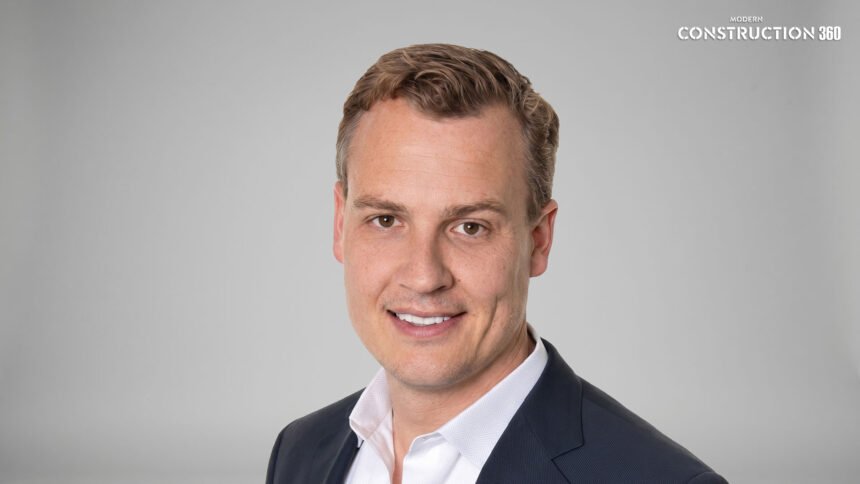
At the heart of this transformation is Rich Riley, a leader whose career has been defined by scaling high-impact technology and transforming digital ecosystems. Serving as the CEO of Sitemetric, Riley brings a unique perspective shaped by his tenure at some of the world’s most recognizable technology firms. Before joining Sitemetric, he served as Co-CEO of Origin Materials, a company dedicated to sustainable material innovation. His earlier career includes an influential era at Shazam, where he was instrumental in scaling the app to over one billion downloads and overseeing its eventual acquisition by Apple. Riley’s background is not limited to software; his 13-year tenure at Yahoo!, where he navigated global markets and managed massive small-and-medium business divisions, gave him a masterclass in operational scaling.
His transition into the construction technology space represents a deliberate pivot to apply his deep expertise in AI, mobile platforms, and global management to an industry that is ripe for a digital-first overhaul.
The Catalyst for Change
For a leader who spent years at the forefront of the consumer internet revolution, the move to construction might seem unconventional to the casual observer. However, Riley’s motivation is rooted in the sheer magnitude and necessity of the built world. He has often spoken to the idea that the physical infrastructure of our world, our power grids, our hospitals, and our data centers, is the most important software-hardware integration we have. His lightbulb moment came from recognizing that the digital tools transforming every other aspect of human life had largely bypassed the construction site. Riley saw an opportunity to bring the same level of data-driven decision-making that powered global tech giants to the foreman in the field. He recognized that the greatest impact could be made by simplifying the lives of those building the future, ensuring they are safer, more connected, and vastly more productive.
Engineering a New Standard
Sitemetric was founded by Brian Thomas and Patrick Thomas, who built the business into a trusted provider of connected jobsite security, access control, and workforce management solutions for large-scale construction environments. The company’s growth is the result of a concerted effort to integrate disparate technologies into a single, unified platform. In the early stages, the team focused on the core problem of site access. By digitizing the check-in process and automating badging, they established a foundation of trust and data integrity. As the company grew, it moved beyond simple access to provide comprehensive jobsite intelligence, backed by strategic investment partnerships to fuel national expansion and product innovation.
Navigating the Hard Hat Culture
The path to scaling a construction technology firm in a competitive, often slow-to-adopt market is fraught with challenges. The industry is inherently skeptical of new disruptive technology that hasn’t been battle-tested. Sitemetric navigated this hurdle by focusing intensely on the practical, boots-on-the-ground experience. They did not just build software; they built a robust support structure that includes field officers, security teams, and monitoring systems that understand the nuance of a bustling jobsite. By demonstrating that their tools actually make the workday easier for trade partners and general contractors, by speeding up entrance queues, securing perimeters, and proactively managing safety compliance, they earned the trust of the industry. Today, Sitemetric’s footprint spans massive hyperscale data centers and complex infrastructure projects across North America, managing thousands of workers and helping owners ensure their high-capital investments are built on a foundation of data-backed reality.
The Power of Intelligent Vision
What truly sets Sitemetric apart is the shift toward advanced artificial intelligence and automated safety in the construction sector. While many competitors offer static cameras that simply record video, Sitemetric is focused on building systems that actively monitor and protect sites. Their proprietary innovation lies in the ability to turn raw site footage into actionable intelligence through AI camera systems, real-time location systems (RTLS), and sophisticated reporting dashboards that communicate directly with industry-standard project management tools like Procore and Autodesk. By centralizing this data, the company removes ambiguity from project management. Riley’s core competency here is the ability to bridge the digital and physical divide, ensuring that software does not just exist in the cloud but actively influences the physical safety and efficiency of the worker on the ground.
Culture, Clarity, and Execution
Rich Riley’s leadership style is characterized by a blend of high-level strategic vision and a deep appreciation for operational detail. He manages his organization with the understanding that for technology to be adopted, it must be useful, not just impressive. Internally, this manifests as a culture that prizes velocity and clarity. Riley fosters a team-oriented environment where a people-first strategy is a core operating principle. He surrounds himself with veterans from federal law enforcement, aerospace engineering, and global software development, creating a multidisciplinary leadership team that can solve problems from multiple angles. Decision-making at Sitemetric is data-driven, mirroring the very platform they sell, ensuring that the company’s internal operations are as optimized as the sites they monitor.
Building Tomorrow’s Foundation
Looking ahead, Sitemetric is positioned to move from a trusted jobsite security provider to the standard operating system for global construction projects. The future roadmap includes deeper AI integration, wider support for autonomous site operations, and a continued push into sectors where project scale is becoming increasingly complex. Rich Riley’s long-term vision is to reach a point where every major project in the United States and beyond uses Sitemetric as the backbone of their operations, moving the needle from manual, reactive safety to proactive, intelligent construction.
As the industry continues to face labor shortages and increasing pressure for tighter deadlines, Sitemetric’s role becomes more critical than ever. The legacy Riley is building is one of professionalized, safe, and efficient construction, a transformation that does not just change the way we build, but fundamentally improves the outcome of the projects that define our modern world. Documenting these vital industry shifts and the leaders steering them forward remains at the heart of our mission here at Modern Construction 360, where we continue to explore the stories shaping the future of the built environment.