Modern civil engineering shapes the daily lives of millions, providing the vital structural networks that define communities. From the clear water running through household taps to the streamlined traffic systems that reduce morning commutes, infrastructure requires meticulous technical oversight. Managing this unseen grid requires a delicate balance of regional accountability, specialized experience, and a willingness to break traditional corporate molds. Apex Engineering Group, Inc. operates at this intersection, providing tailored engineering solutions throughout the Upper Midwest. Headquartered in Fargo, North Dakota, the firm has built its reputation on local ownership and direct project execution. Led by President and CEO Thomas Welle, PE, the company works directly with communities to navigate the complex demands of modern municipal design.
The Pitfalls of Corporate Disconnect
The civil engineering industry frequently suffers from structural disconnects when mid-sized regional firms are absorbed by large national conglomerates. In these larger corporate frameworks, decision-making authority often shifts to remote headquarters far removed from the communities being served. For municipalities and local utilities, this shift can lead to cookie-cutter project templates that fail to account for distinct local landscapes, weather patterns, or budgetary constraints.
Furthermore, traditional corporate engineering structures often layer projects with multiple tiers of management. This administrative overhead separates senior technical experts from hands-on field execution, leaving junior staff to manage complex municipal challenges without sufficient oversight. As a result, communities can face costly project delays, misaligned priorities, and public works initiatives that create fresh bureaucratic complications instead of solving practical problems.
A Specialized Engineering Leader
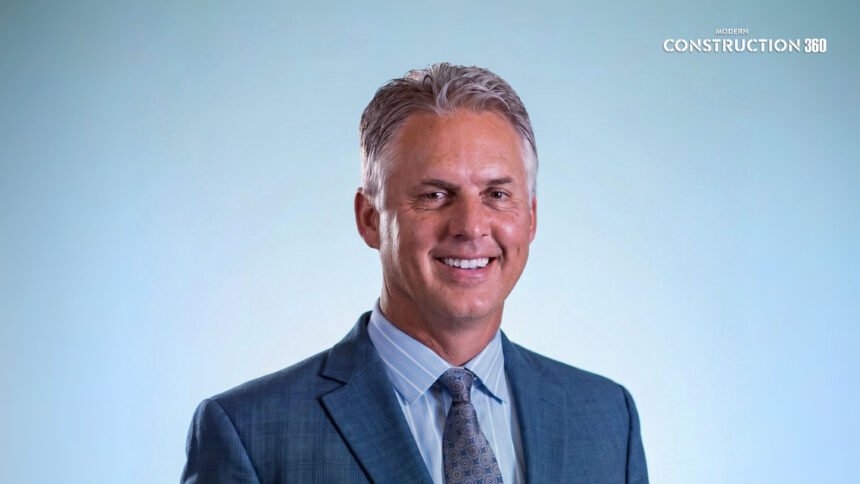
Thomas Welle, PE, serves as the President and CEO of Apex Engineering Group, Inc., bringing decades of regional civil engineering expertise to the role. Specialized in water and wastewater infrastructure, Welle spent a significant portion of his career managing major environmental sectors and leading complex public works initiatives. Before founding Apex, he served as a Senior Vice President and water sector manager at Ulteig Engineers, Inc., focusing on the technical realities of municipal utilities, water treatment facilities, and distribution systems across North Dakota and Minnesota. As a registered Professional Engineer (PE), Welle combines technical precision with a business philosophy centered on regional accountability, positioning himself as a leader who prioritizes practical execution over corporate bureaucracy.
Redefining Professional Values
Welle’s transition into independent corporate leadership was driven by a desire to reconnect the engineering profession with its core purpose: serving local clients through rational, direct design. Over years of working within expanding corporate networks, Welle and several senior colleagues observed that consolidation often diluted professional accountability and restricted the potential of technical experts.
Frustrated by corporate models that prioritized administrative processes over client collaboration, Welle sought to build an environment where engineers could maintain complete ownership of their work. His motivation focused on establishing a firm grounded in an entrepreneurial mindset, allowing senior engineers to work directly with clients on-site rather than managing projects from a distant corporate office.
A Vision Takes Shape
In late 2010, Thomas Welle, alongside a group of experienced senior engineers, co-founded Apex Engineering Group. The founding team united around a shared goal: to return to the foundational basics of civil engineering by delivering practical, efficient, and cost-effective solutions. Rejecting top-heavy corporate frameworks, they established an employee-owned business structure designed to keep decision-making authority local.
The firm launched with strategically placed offices in Fargo and Bismarck, North Dakota, focusing its initial operations on core municipal services: water management, transportation networks, and environmental facilities. By ensuring that every founder was a practicing, senior-level professional, the young company immediately offered public clients direct access to seasoned experts from the initial planning stages through final construction.
Overcoming Friction and Expanding Footprints
The early years of Apex Engineering Group were defined by both rapid market adoption and significant institutional friction. Establishing an independent, competitive firm required navigating intense civil and contractual disputes with their previous employer regarding the sudden transition of a large group of senior professionals. This period involved complex civil litigation surrounding corporate loyalty, non-compete clauses, and customer non-solicitation, testing the endurance and ethical framework of the founding leadership team. Throughout the transition, the founders maintained their professional engineering licenses in perfect standing, demonstrating their commitment to industry standards.
Despite these early legal and structural hurdles, Apex’s client-first approach resonated across the region. The firm systematically expanded its geographical footprint by opening strategic offices in Dickinson, North Dakota, to serve the Bakken oil region, as well as Detroit Lakes, St. Cloud, and Minnetonka, Minnesota, to target expanding infrastructure corridors. This growing network enabled Apex to scale its workforce from the original founders to a robust team of over 100 full-time professionals, proving the long-term viability of its localized business model.
Driving Innovation in Municipal Utilities
Welle and his team have established deep expertise across four primary service sectors: water, transportation, municipal, and facilities engineering. Under Welle’s leadership, Apex has specialized in high-profile municipal utility innovations, particularly in the monetization of treated wastewater. A landmark project achieved this by directing reclaimed municipal wastewater from the City of Dickinson directly to the Dakota Prairie Refinery, a specialty oil facility operated by MDU Resources Group and Calumet. The firm also executed infrastructure projects, allowing the City of Fargo to sell treated wastewater to an industrial ethanol plant in Casselton.
By turning public waste streams into viable industrial revenue sources, Welle’s firm demonstrates a forward-thinking approach to resource management. Whether managing large-scale water treatment upgrades or restructuring major regional corridors like 13th Avenue South in West Fargo, the company focuses on creating durable public works that blend seamless functionality with regional economic benefit.
Cultivating an Entrepreneurial Workforce
Welle’s leadership style emphasizes employee empowerment, shared accountability, and direct client engagement. Operating within an employee-owned framework, he encourages a flat organizational structure where every engineer behaves like a business partner. Rather than shielding staff behind administrative layers, Welle positions his team to be highly accessible to city councils, utility boards, and public works directors.
To sustain this collaborative culture amid regional engineering labor shortages, Welle focuses heavily on local talent cultivation. Apex engineers regularly serve as guest lecturers on regional university campuses, participate in student organizations, and run a robust, year-round internship program. This approach ensures that junior engineers are mentored directly by senior principals, sustaining the firm’s focus on practical, hands-on expertise.
Sustaining the Inverted Corporate Pyramid
As infrastructure demands evolve under changing environmental standards and digital advancements, Thomas Welle maintains a clear focus on the firm’s foundational principles. The future of Apex Engineering Group centers on expanding its regional impact across North Dakota, Minnesota, and the wider Upper Midwest, while resisting the corporate pressures that alienate larger firms from local communities.
By keeping senior engineers actively engaged in the field, Welle ensures that the company remains agile, rational, and deeply connected to the public utilities it designs. For Apex, long-term success is not measured by administrative scale, but by the quiet reliability of the systems they build, ensuring that clean water flows, traffic moves efficiently, and local communities retain a trusted, accessible partner for their infrastructure needs.