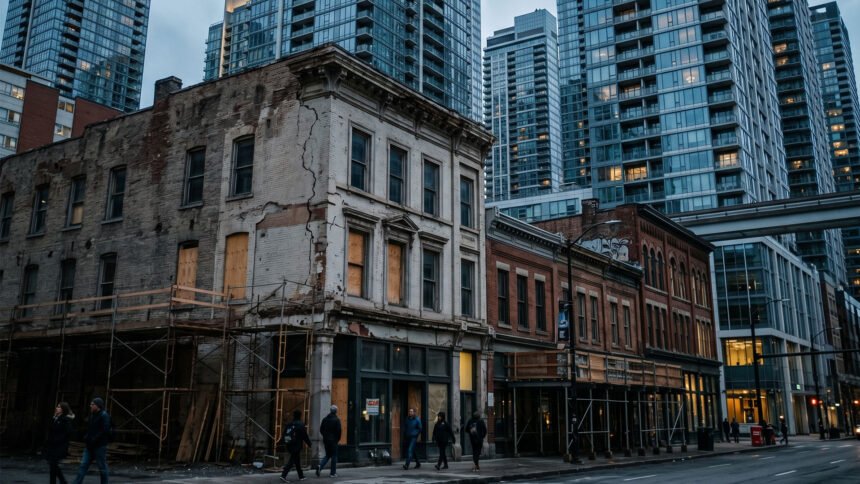
Picture this: a developer breaks ground on a new apartment block in downtown Denver. Two years later, the crane is still up. Rents in the neighborhood have climbed another 11%. Workers who were supposed to frame the second floor in March finally show up in June, because there simply aren’t enough of them. Meanwhile, the city council is holding its third “housing emergency” press conference of the year.
This isn’t a hypothetical. It’s playing out in cities across America, and traditional building methods are a significant reason why. The way we construct homes and commercial buildings, poured concrete, hand-laid brickwork, dozens of trades converging on a single chaotic site, was never designed for the speed, scale, or sustainability demands of modern cities. And the gap between what these methods can deliver and what cities actually need is widening fast.
Why Are Traditional Building Methods Failing Cities Right Now?
Traditional building methods fail modern cities because they cannot keep pace with urban demand, are locked into shrinking labor pools, and carry environmental costs cities can no longer afford. They build one day at a time, and demand doesn’t wait.
Think about what it takes to build a mid-rise apartment tower using conventional methods. You need a large staging area for materials. You need sequential trades: the foundation crew finishes, then framing, then mechanical, then electrical, each waiting for the last. One permit delay, one steel shortage, one rainy month, and the whole schedule slips. McKinsey has documented that large construction projects in the US routinely run 20–30% over both time and budget. That’s not a rounding error. In housing markets where every month of delay means hundreds of families waiting, it’s a structural crisis.
And here’s what makes it worse: adding more projects to the same pipeline doesn’t fix the bottleneck. It deepens it.
The Labor Shortage Nobody Talks About Enough
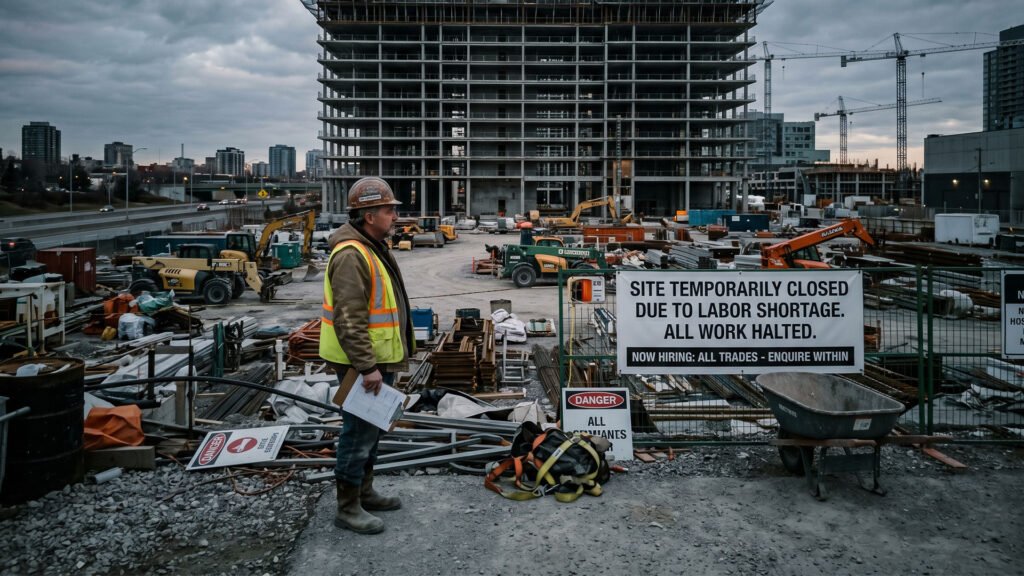
Here’s a number that should stop you cold: the US construction industry needs to hire approximately 723,000 new workers every year just to keep up with current demand, according to the National Association of Home Builders (NAHB). On any given month, there are between 300,000 and 400,000 unfilled construction jobs sitting open.
A joint study from the University of Denver, the Home Builders Institute, and the NAHB found that the annual economic impact of the skilled labor shortage totals approximately $10.8 billion and led to roughly 19,000 fewer single-family homes being built in 2024 alone.
That’s not an abstraction. Those are real families who didn’t get a home last year because there wasn’t anyone to build it.
With 22% of tradespeople now over age 55 and decades of declining trade school enrollment, the industry faces a compounding generational gap that won’t be solved with a few recruitment campaigns. Wages have spiked. Residential building workers saw a 9.2% pay increase in 2024, but higher wages don’t conjure skilled carpenters and electricians out of thin air. They just make every project more expensive.
Traditional on-site construction is the most labor-intensive way to build. It requires the most bodies, the most coordination, the most room for things to go wrong. In a market where labor is the binding constraint, that’s a critical vulnerability.
Cities Are Running Out of Room to Build the Old Way
Beyond labor, there’s a physical problem. Dense urban cores, the places that need housing most urgently, are the worst possible environments for traditional construction. Infill sites in cities like Chicago, Boston, and Seattle are often wedged between existing buildings, with zero room for the lay-down areas that conventional methods require. Lumber, steel, concrete forms, temporary offices, porta-potties, all of it has to go somewhere.
Offsite and modular construction sidestep most of this friction. Components get fabricated in a factory, shipped to the site, and assembled in a fraction of the time. Cities like Toronto and London have already leaned on modular approaches for social housing projects, completing buildings faster and on smaller footprints than conventional builds would allow.
Does this mean modular is perfect? Not quite. But the principle is sound: move the mess off-site, and you remove one of the biggest drag factors slowing urban construction.
The Climate Problem Baked into Concrete
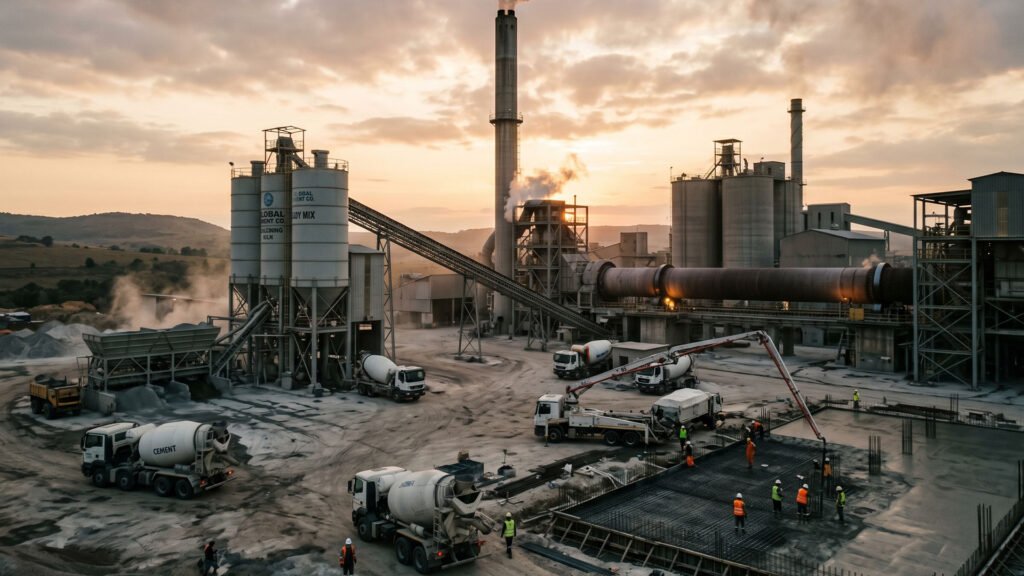
Climate policy has started to bite, and traditional construction isn’t well-positioned for what’s coming. Concrete and steel production are among the heaviest industrial carbon emitters on the planet. Every traditional pour, every structural steel frame, locks in a carbon footprint for decades.
At the same time, cities are dealing with more frequent heat waves, flooding, and extreme weather events, and many buildings constructed with conventional methods simply weren’t designed for that. Poor insulation, leaky envelopes, and no passive cooling to speak of. Prefabricated panels with integrated insulation and factory-controlled quality can produce tighter, more energy-efficient buildings at scale. Traditional methods can too, but they require deliberate design choices that the industry has been slow to make standard practice.
What Is Modular Construction – and Does It Actually Work?
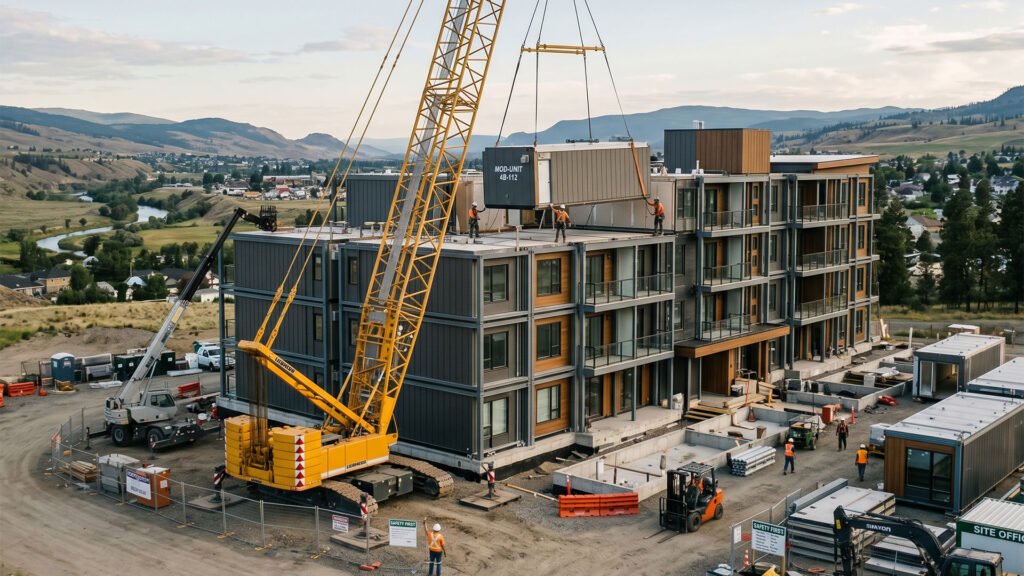
Modular construction is a method where building sections are manufactured in a controlled factory environment, then transported to a site and assembled. It reduces on-site labor requirements, compresses timelines, and can improve quality consistency compared to weather-dependent site work.
The honest answer on whether it “works”: it depends. A UK House of Lords inquiry found that modular construction isn’t yet generating the cost savings it promised, with some housing associations reporting modular estimates running 30–50% higher than conventional builds in certain cases. That’s a real challenge. The economics of modularity improve significantly at scale, but reaching that scale requires a steady pipeline of work, and many developers won’t commit without the cost certainty that scale would provide. A genuine chicken-and-egg problem.
Still, cities from Minneapolis to New York to Los Angeles have piloted modular and mass-timber projects, often for affordable housing, and are learning how to streamline permitting, align lending practices, and reduce the cost gap. The trajectory is in the right direction. It just isn’t there yet.
The Path Forward Isn’t “More of the Same”
Some voices argue the solution is straightforward: deregulate, remove zoning barriers, and let the market build more using tried-and-true methods. On the surface, that’s reasonable. But if you pour more projects into a pipeline that’s already constrained by labor shortages, site limitations, and slow timelines, you don’t get more housing, you get more expensive housing, built slower.
Traditional building methods aren’t wrong. They’re just no longer sufficient as the default option for cities facing simultaneous housing, climate, and cost crises. In historic districts, in rural markets, in specialized projects that demand craft, conventional methods still have a legitimate role. The conflict isn’t old versus new. It’s flexibility versus inertia.
The cities that will win this, that will actually build their way out of a housing shortage, are the ones treating construction methods as a toolkit, not a religion. That means streamlining permits for modular projects, reforming lending practices that penalize non-traditional timelines, and investing seriously in workforce training for digital and off-site techniques.
Because building like it’s 1975 won’t solve the housing crisis of 2026. Every month we delay modernizing how we build is another month of rents climbing, families waiting, and cities falling further behind.