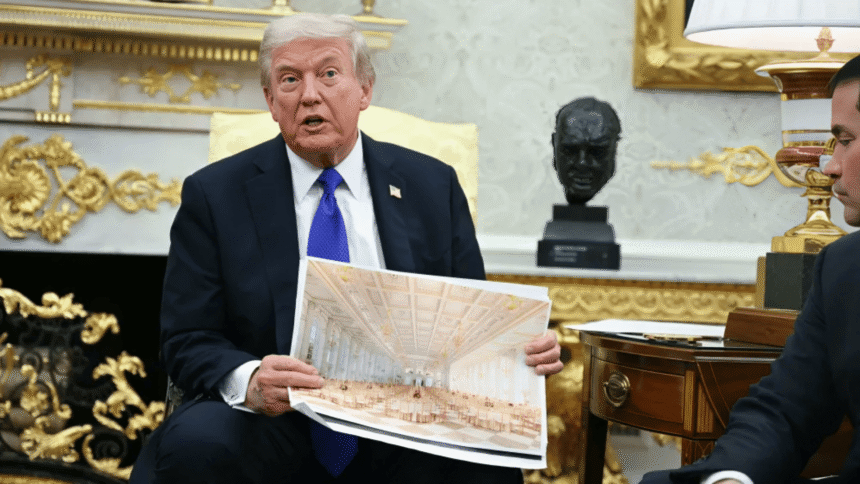
A federal judge in Washington, D.C., held a hearing on January 22, 2026, to assess a preservation group’s request to stop President Donald Trump’s $400 million White House ballroom project. U.S. District Judge Richard Leon, a George W. Bush appointee, questioned the Trump administration’s legal authority for the 90,000-square-foot ballroom on the demolished East Wing site.
Hearing Key Details
Judge Leon scheduled the 3 p.m. ET hearing to evaluate the National Trust for Historic Preservation’s motion for a preliminary injunction. The nonprofit sued Trump and federal agencies in December 2025, alleging violations of laws including the National Capital Planning Act, National Environmental Policy Act, and requirements for congressional approval on D.C. federal grounds. No ruling emerged immediately; Leon anticipates a decision in the coming weeks.
Administration’s Defense
Justice Department lawyer Jacob Roth argued the ballroom supports state functions, with design ongoing and above-ground work not starting until April. The White House submitted plans last month to the National Capital Planning Commission (NCPC) and Commission of Fine Arts, following a recent NCPC hearing, the first public discussion. Officials claim no injunction needed, as initial site work complies with procedures.
Judge’s Skepticism
Leon pressed whether the project bypasses Congress, calling it an “end run” around oversight for a $400 million endeavor. He rebuked Roth to “be serious,” distinguishing it from smaller past White House projects like fencing. In December 2025, Leon allowed initial construction but ordered plan submissions, setting this follow-up.
Project Background
Trump announced in July 2025 that the ballroom would host 1,000 guests, avoiding lawn tents for events; costs rose from $200 million initially. Demolition of the East Wing began in October 2025 without full approvals, prompting the suit. Architect updates from Michael Baranes reflect Trump’s input after prior design disputes.
Funding Sources
Private donors fund the project through the Trust for the National Mall, with 37 contributors, including tech giants such as Amazon, Apple, Microsoft, Meta, and Alphabet, as well as crypto firms such as Coinbase. Defense contractors like Lockheed Martin, as well as tobacco firms and Republican donors, also contribute; Trump claims $350 million raised, with no taxpayer money. Costs hit $400 million by November 2025.
This legal battle over the construction of the White House ballroom highlights tensions over historic preservation and executive authority. Judge Leon’s pending decision could pause work amid ongoing reviews.
Image Credit – san.com