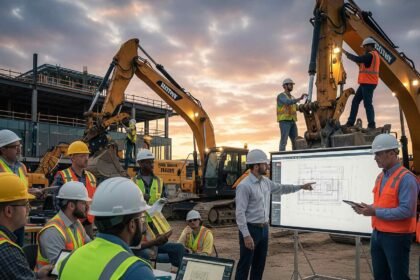
The modern American construction landscape stands at a trillion-dollar intersection of immense demand and staggering structural inefficiency. Cement production alone accounts for roughly ten percent of annual global carbon emissions, yet up to seventy percent of the reinforced concrete poured into a typical commercial building is fundamentally unnecessary. Traditional engineering and manufacturing workflows have relied on uniform, heavy cross-sections for generations simply because calculating and casting complex, material-efficient geometries by hand was far too labor-intensive and expensive.
This historic friction point has created an urgent mandate for change across the United States architectural, engineering, and construction sectors. Into this high-stakes environment steps Forma Systems, led by co-founder and CEO Alexander “Sandy” Curth, introducing intelligent software solutions that bridge the gap between advanced structural design and high-volume precast concrete manufacturing.
The Concrete Dilemma
For decades, structural designers and precast concrete producers across the United States have operated under rigid manufacturing constraints that stifle material innovation. Conventional reinforced concrete elements are routinely cast with uniform thickness and uniform steel reinforcement grids across their entire span, regardless of where loads are actually concentrated. This uniform distribution wastes millions of tons of concrete and steel every year, locking high embodied carbon footprints and inflated material expenses directly into urban infrastructure. While academic researchers have long understood that shape-optimized geometries, which place material strictly where physical forces demand it, can drastically lower weight and carbon, translating complex mathematics into a factory-floor reality has remained an elusive goal.
Precast producers operating on tight margins cannot afford days of manual design computation or custom formwork fabrication that disrupts assembly lines. The industry desperately needed a scalable digital bridge to automate structural optimization without disrupting established construction methods.
Engineering a New Standard
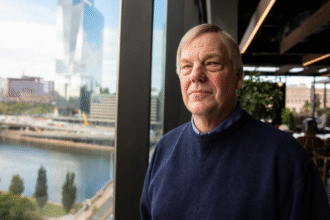
Alexander “Sandy” Curth serves as the co-founder and CEO of Forma Systems, bringing a rare blend of deep academic research, computational design expertise, and hands-on fabrication experience to the built environment. As a doctoral researcher within the Design and Computation Group at the Massachusetts Institute of Technology, Curth spent years exploring the intersection of architectural additive manufacturing, material science, and structural optimization. Recognized as a Martin Family Society of Fellows for Sustainability scholar and a Norman Foster Foundation Robotics Scholar, he built an exceptional reputation for developing democratization tools in digital fabrication.
Rather than keeping these breakthroughs confined to academic papers, Curth chose to translate advanced generative engineering into commercial software, ultimately spinning Forma Systems out of MIT to directly confront the material inefficiencies plaguing modern construction.
From Academic Insight to Industry Action
The catalyst for Forma Systems was born from a fundamental frustration with how modern cities are built and the heavy environmental toll of conventional construction methodologies. During his advanced research tenure at MIT, Curth spent considerable time investigating alternative manufacturing strategies, sustainable biomaterials, and large-scale 3D printing techniques using locally sourced earthen formworks. He observed firsthand that while humanity possesses the computational tools to design incredibly lightweight, high-performance structures, the construction industry lacked an accessible digital layer to connect algorithmic optimization with factory production lines.
The lightbulb moment arrived with the realization that sustainability and economic viability do not have to be opposing forces; by decoupling structural complexity from production costs through intelligent software automation, builders and manufacturers could drastically reduce their material footprints while simultaneously improving profit margins.
Designing the Future from the Ground Up
Forma Systems was officially spun out of MIT’s elite research laboratories to commercialize proprietary multi-objective optimization engines designed specifically for the precast concrete industry. The founding team, featuring leadership alongside co-founder and Chief Product Officer Kiley Feickert, set out to build a platform that could evaluate tens of thousands of design configurations in seconds.
This vision materialized into Cimbra, the company’s flagship structural optimization platform. Cimbra operates by ingesting a manufacturer’s actual mold inventory, material library, and project objectives, running rapid parametric evaluations against rigorous American Concrete Institute code requirements. Instead of forcing manufacturers to overhaul their operations, Forma Systems engineered the software to output fabrication-ready, code-verified designs that seamlessly integrate with standard plant machinery and jobsite logistics across the United States.
Turning Skepticism into Scale
Transitioning cutting-edge computational research out of an academic lab and into commercial precast manufacturing plants presented severe operational and market hurdles. Traditional construction sectors are notoriously risk-averse, often hesitant to adopt unproven software or unfamiliar structural profiles that deviate from decades-old standard handbooks. To overcome this skepticism, Curth and his team focused heavily on empirical validation, partnering directly with industry leaders like J.P. Carrara & Sons, Buro Happold, and Turner Construction Company to test real-world prototypes.
A major validation milestone occurred with the successful design, fabrication, and full-scale load-testing of a shape-optimized precast floor slab showcased at a prominent Structures Congress exhibition. Backed by innovation grants from organizations like the Massachusetts Clean Energy Center, Forma Systems proved that its optimized structural members could achieve dramatic weight reductions and lower embodied carbon without sacrificing structural integrity or constructability.
Intelligence Beyond the Blueprint
At the core of Forma Systems’ market advantage is its unique ability to treat structural optimization as a flexible, scalable platform rather than a rigid point tool. While initial deployment focuses heavily on precast concrete floor systems and wall panels, the underlying computational engine is architected to expand across diverse structural systems, building codes, and industrialized manufacturing workflows. The company’s expertise lies in eliminating the false choice between economic thrift and environmental stewardship.
By ensuring that concrete and steel are placed strictly where structural mechanics demand them, Forma Systems enables U.S. contractors and precast producers to navigate tightening carbon regulations, lower material shipping weights, reduce crane lifting requirements, and accelerate jobsite installation timelines without increasing capital expenditures.
Cultivating a Culture of Clarity
Curth’s leadership philosophy reflects an intentional synthesis of rigorous academic inquiry and agile startup execution. Inside Forma Systems, he fosters a collaborative, cross-disciplinary corporate culture that brings together structural engineers, computational designers, software developers, and building industry veterans. Decision-making is driven by empirical data, iterative prototyping, and open dialogue with real-world partners on the factory floor and the construction jobsite.
By empowering domain experts to take ownership of complex technical challenges, Curth maintains a mission-driven environment where team members are encouraged to push the boundaries of computational design while keeping a sharp focus on practical, deployable commercial value for industrial partners.
Building Smarter for Tomorrow
Looking toward the horizon, Forma Systems is uniquely positioned to redefine the structural backbone of the American built environment as regulatory pressures and corporate sustainability mandates intensify. The roadmap ahead involves expanding the Cimbra platform across broader regional markets, integrating additional structural materials, and scaling partnerships with major nationwide contractors and precast producers. By systematically removing the friction between advanced computational design and heavy manufacturing, Curth and his team are laying the groundwork for a more efficient, low-carbon future.
Forma Systems stands as proof that the next generation of infrastructure innovation will not come from building heavier, but from building smarter, reshaping how cities are engineered from the ground up. Chronicles of transformation like this, which track how visionary leaders and emerging technologies are quietly reshaping the American built environment, continue to be documented closely across our ongoing coverage at Modern Construction 360.