Across the United States, thousands of modern office towers, sprawling industrial warehouses, and bustling commercial complexes stretch toward the skyline. These architectural feats represent trillions of dollars in real estate assets, yet the vast majority of them operate on the technological equivalent of autopilot from several decades ago. While information technology has advanced at a staggering pace, the physical structures where people work, shop, and manufacture goods have remained largely static. Buildings consume nearly forty percent of all global energy, yet fewer than five percent of them function as truly intelligent assets. This massive discrepancy highlights one of the most persistent inefficiencies of the modern industrial economy, setting the stage for a profound shift in how the built environment functions.
Untangling the Complexity of Modern Infrastructure
For generations, the commercial real estate and industrial sectors have wrestled with a deeply entrenched operational friction point: traditional building automation is painfully expensive, rigid, and labor-intensive. Traditional control systems require thousands of hours of custom engineering, manual programming, and ongoing human intervention just to keep heating, ventilation, and cooling systems running. Because these legacy architectures are so difficult to scale, intelligent automation has historically been reserved for only a small fraction of ultra-premium high-rise properties. For everyone else, buildings operate far below their potential. They waste excess energy, drive up operating expenses, strain local power grids, and fail to provide optimal comfort for their occupants. Bridging this gap required an entirely new approach to how physical systems process data and make decisions in real time.
A Visionary Leader for the Built World
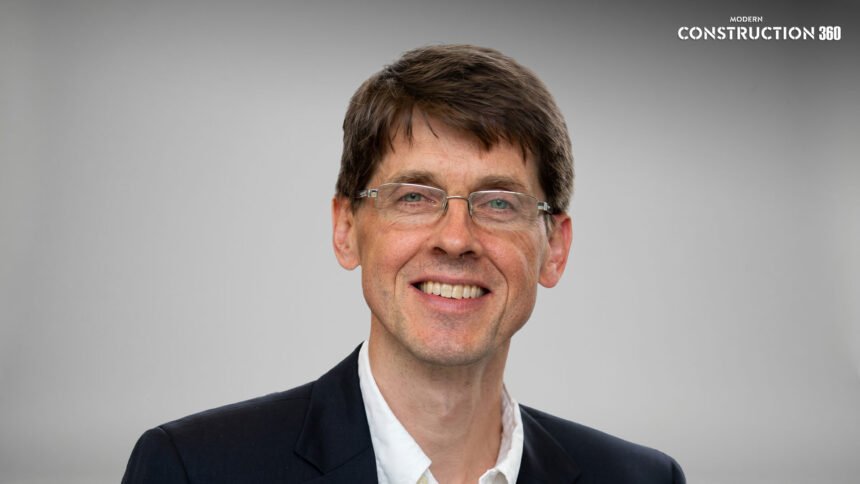
Stepping into this high-stakes arena is Thomas Kiessling, a seasoned technology executive and industrial transformation leader who took the helm as CEO of PassiveLogic. Bringing decades of international engineering and leadership experience to the table, Kiessling has built a career around scaling complex technologies that bridge the digital and physical worlds. Prior to joining the Salt Lake City-based innovator, he served as the Chief Technology Officer of Siemens Smart Infrastructure, where he helped shape global industrial artificial intelligence strategies and spearheaded the development of advanced digital building platforms.
His impressive credentials also include co-founding AMPLY Power, a pioneering electric vehicle fleet charging-as-a-service company later acquired by BP. By stepping forward to lead PassiveLogic, Kiessling positioned himself at the absolute forefront of the physical artificial intelligence movement, guiding a company designed to rewrite the rules of infrastructure efficiency.
The Personal Catalyst for Industrial Transformation
For Kiessling, the motivation to reshape the built environment stems from a long-standing fascination with complex systems and thermodynamic realities. Throughout his academic and professional journey, spanning advanced studies in mathematics, economics, and computer engineering, alongside a doctorate in operations research, he observed a recurring pattern across industries. While software ecosystems were becoming infinitely smarter, the heavy industrial assets driving the global economy remained trapped in rigid, manual loops.
The realization that buildings, energy grids, and manufacturing plants were the largest unoptimized operating systems on Earth served as a powerful professional catalyst. Watching the maturation of artificial intelligence and edge computing from his vantage point at industrial giants, Kiessling recognized that the missing link was not a lack of data, but a lack of autonomous reasoning built directly on the laws of physics. This insight drew him toward leading PassiveLogic, viewing it as an enterprise successfully building a complete vertical software and hardware stack for physical autonomy.
Constructing the Blueprint for Autonomous Operations
PassiveLogic’s journey from an ambitious startup into an industry-defining enterprise is a testament to relentless technological execution. Founded originally by Troy Harvey and Jeremy Fillingim, the company spent years in deep research and development, quietly building the foundational layers of a new technology category with the bold vision of turning every building into a self-optimizing, grid-interactive asset. Rather than relying on rigid, traditional programming, the company engineered Quantum, a physics-based world model and digital twin standard that enables systems to understand their physical environment instantly.
Paired with Hive, the company’s proprietary edge controller hardware, this ecosystem allows commercial and industrial facilities to automatically generate digital twins and utilize thermodynamic artificial intelligence to optimize performance on the fly. This breakthrough architecture trains models exponentially faster than standard frameworks, setting a completely new standard for industrial computing.
Navigating Scale and Macroeconomic Realities
Scaling a paradigm-shifting technology in the conservative commercial real estate and industrial sectors is rarely straightforward. In its early days, the company faced considerable market skepticism, with traditional investors often meeting the concept of fully autonomous buildings with blank stares. However, through disciplined product delivery and clear demonstrations of massive energy reductions, that skepticism rapidly dissolved into robust financial and strategic backing. The organization successfully secured significant funding rounds, drawing investments from prominent venture arms and industrial giants like NVIDIA’s NVentures, Johnson Controls, Prologis Ventures, and Brookfield. This influx of capital and strategic partnership validation fueled the company’s multi-year buildout, culminating in major commercial rollouts that pushed total funding past major milestones and positioned the firm for explosive global growth under Kiessling’s executive direction.
Proprietary Innovation and Deep Technical Competencies
What sets PassiveLogic apart from legacy competitors is its comprehensive, end-to-end approach to physical artificial intelligence. While traditional smart building companies offer piecemeal software integrations or cloud-dependent dashboards that require constant human tuning, PassiveLogic provides a generalized autonomy platform operating directly at the edge. By combining advanced generative artificial intelligence with deterministic physics engines, the company’s platform allows infrastructure to reason, make decisions, and execute adjustments autonomously in real time. This capability slashes deployment costs, drives average energy reductions of up to twenty-five percent or more, extends equipment lifespans, and enhances occupant comfort, transforming static concrete structures into active, intelligent participants in the modern energy economy.
Cultivating a Culture of Rigorous Innovation
Inside the corporate walls, Kiessling fosters a leadership style defined by intellectual rigor, collaborative problem-solving, and a deep respect for interdisciplinary engineering. Drawing from his extensive background in global corporate environments and agile clean-tech startups, he encourages teams to look past convention and tackle fundamental physics challenges rather than surface-level software problems. His management philosophy centers on empowering world-class engineering talent to experiment boldly while maintaining a sharp focus on commercial viability and customer value. By blending the strategic discipline of a seasoned industrial executive with the agility of a technology innovator, Kiessling fosters an inclusive, mission-driven corporate culture where engineers, data scientists, and industry veterans work seamlessly together to redefine the built world.
The Horizon of Smart Infrastructure
As commercial markets across the United States and around the globe face mounting pressure to meet aggressive decarbonization goals and manage tightening electrical grid capacities, the need for autonomous infrastructure has never been more urgent. Under Kiessling’s executive leadership, PassiveLogic is poised to accelerate its commercial footprint, driving the mass adoption of physical artificial intelligence across millions of square feet of commercial and industrial real estate. By turning buildings into self-managing assets that protect the environment while optimizing human comfort, the company is not merely upgrading software; it is laying down the permanent digital foundation for the sustainable, smart cities of tomorrow.
As the urban landscape continues its rapid evolution, the convergence of artificial intelligence and physical infrastructure points toward a future where our built environment is no longer just a passive shelter, but an active, self-optimizing participant in daily life. For industry professionals, real estate developers, and engineering leaders navigating this era of transformation, keeping a pulse on these technological shifts is more critical than ever. Exploring these profound changes and tracking the innovations shaping tomorrow’s smart cities remains a core focus of our ongoing editorial work here at Modern Construction 360, where we continue to document the intersection of advanced technology and the built world.