The global real estate market faces a quiet but massive contradiction: cities are packed with concrete apartment complexes that bake under open sunlight, yet their rooftops remain completely bare of solar infrastructure. In Europe, close to half of the population shares a roof in multi-family housing setups. Yet, while single-family suburban homes have adopted residential photovoltaic technology aggressively over the past decade, urban multi-family buildings have stayed stuck in the fossil-fuel past.
In Germany alone, there are roughly 20 million rental units spread across 1.9 million multi-family residential structures. Shockingly, fewer than 2% of these buildings are powered by on-site solar systems. This massive, unexploited territory represents the single largest white-space market in continental climate tech. The barrier has never been a lack of sunlight or a shortage of physical roof space. Instead, it was an overwhelming mountain of regulatory red tape and administrative friction that turned interested landlords into accidental utility companies.
The Regulatory Trap of Community Energy
Before recent structural adjustments to European energy policy, property owners who wanted to provide clean, cheap electricity to their tenants faced a brutal legal roadblock. If an owner installed solar panels on a shared roof, the only clear path to distribute that power required them to formally assume the role of a municipal utility provider.
Taking on the legal identity of an energy supplier meant absorbing intense regulatory burdens. Landlords had to guarantee back-up grid supply, manage complex local grid feeding tariffs, navigate volatile tax codes, and manually calculate fluctuating usage models for every single tenant. For individual property owners, housing cooperatives, and even large-scale real estate developers, the financial return simply did not justify the immense operational headache. The status quo was a gridlock where property owners lost out on extra property yields, tenants continued to pay premium retail energy prices, and cities missed out on critical decentralized clean energy generation.
Shifting the Urban Energy Status Quo
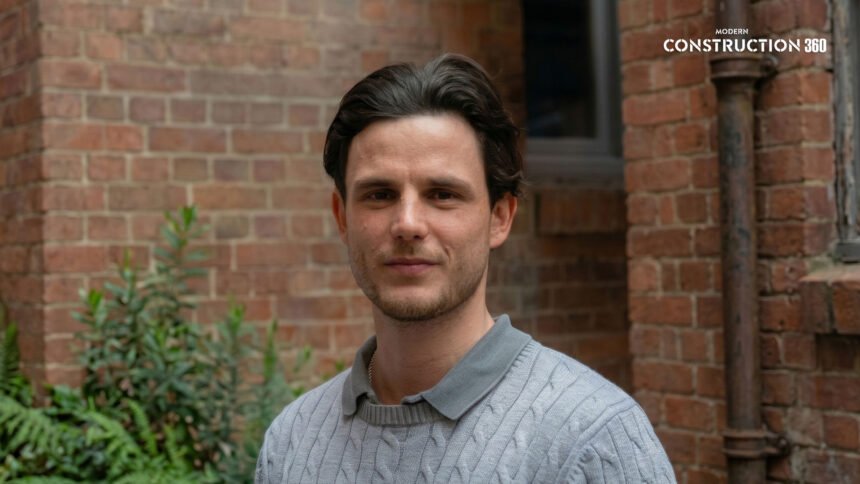
Enter Julius Pahmeier, the Co-Founder and CEO of Berlin-based energy-tech pioneer VREY. Founded in early 2024 alongside co-founder Cedric Jaeger, the company has positioned itself as the definitive EnergyOS for multi-family buildings across Europe. Under Pahmeier’s leadership, the company transforms complex, opaque decentralized energy regulations into a seamless, automated digital infrastructure layer.
Pahmeier did not set out to build a legacy solar installation firm. Instead, he recognized that the actual bottleneck preventing massive climate tech adoption was a software and data orchestration problem. By combining certified smart metering operations with automated billing algorithms, Pahmeier has built a mechanism that handles the entire heavy lifting of localised energy management. This allows property owners to generate and distribute clean power directly to their tenants without taking on the regulatory liabilities or corporate overhead of an energy utility. The software handles the data stream from the physical panels, processes it through a compliance layer, and generates automated tenant invoices natively.
Designing a Founder’s Career for Impact
The strategic vision behind the company is the direct result of Pahmeier’s intentional personal journey. Fascinated by the deep intersection of sustainability, engineering, and real estate since his teenage years, Pahmeier purposely mapped out his academic and early professional choices to prepare for building a venture in this specific arena.
While many tech founders stumble into the climate ecosystem by chance or corporate migration, Pahmeier built a foundational thesis early on: real urban decarbonization cannot happen without unlocking the multi-tenant residential asset class. This long-standing obsession with solving the real estate industry’s carbon footprint became the catalyst for the venture when a major regulatory shift finally cracked open the door.
The Policy Unlock of 2024
The perfect alignment of personal motivation and market opportunity occurred in early 2024 with the introduction of Germany’s new solar package reforms, specifically the introduction of Collective Building Supply (Gemeinschaftliche Gebäudeversorgung, or §42b of the German Energy Industry Act). This new regulatory framework fundamentally reset the rules of the game. It allowed building owners to install solar systems, allocate the generated power to tenants via simple, pre-agreed distribution keys, and bill them directly without triggering traditional utility obligations.
Recognizing that this fresh policy created an immediate white-space market, Pahmeier and Jaeger launched the venture to turn this theoretical legal opening into functional, automated software. While legacy providers tried to retrofit old, clunky tenant electricity models (Mieterstrom), Pahmeier built a platform native to the new legal framework. The company manages the entire physical and digital workflow: operating as a certified smart-metering partner, tracking real-time tenant consumption, calculating exact solar offsets, and running automated monthly invoicing.
Navigating Slow Enterprise Cycles
Scaling a startup within the traditional European real estate landscape is a notoriously difficult task. The property sector is highly risk-averse, slow to procure new technology, and governed by long, multi-layered decision-making processes across housing boards and asset management committees. To break through this friction, Pahmeier focused heavily on demonstrating clear, undeniable unit economics right from the start.
The company’s commercial model proves that a community solar project becomes highly profitable at around 15 kilowatt-peak (kWp) of installed capacity. For example, an average 30 kWp solar array installed on an eight-unit apartment building can yield an extra €5,500 in clean annual revenue for the landlord, allowing the asset to completely amortize within a decade. Simultaneously, individual tenants save between €120 and €180 annually on their power bills without ever needing to switch their primary energy provider. By turning climate compliance into a lucrative triple-win scenario, Pahmeier successfully compressed the real estate sector’s typical sales cycles.
Capital and Footprint Scale
The speed and pragmatic execution of this model quickly caught the attention of prime European impact and deep-tech venture capital firms. In April 2026, following a steady two-year rollout of their architecture, the company successfully closed a €3.3 million Seed funding round led by Rubio Impact Ventures, with active backing from the High-Tech Gründerfonds (HTGF) and Kopa Ventures.
This capital injection is weaponized to expand the core team of approximately 20 employees based in Berlin and accelerate platform deployments. The company’s growth footprint is substantial: it currently manages a three-digit number of live energy projects operating smoothly across all 16 German federal states, serving a diverse portfolio of private individual landlords, large housing cooperatives, and institutional project developers. The funding allocation is strictly divided between core engineering scaling, regulatory compliance automation, and enterprise sales deployment across Central Europe.
The Vision for a Decentralized Building OS
Pahmeier’s core expertise lies in his rare ability to blend rigorous regulatory compliance with high-utility software product architecture. Legacy competitors often approach building solar as a one-time construction trade. Pahmeier views it as a continuous software-driven data loop.
The proprietary platform acts as a foundational operating system that can gracefully scale alongside a building’s physical upgrades. Once the certified smart metering framework is embedded into a property, the platform seamlessly integrates adjacent green infrastructure. As landlords add centralized battery storage, commercial heat pumps, and electric vehicle (EV) charging stations, the platform automatically incorporates these new nodes into its distribution, balancing, and billing software. This sequence turns static brick-and-mortar buildings into dynamic, intelligent micro-grids without requiring a redesign of the underlying software infrastructure.
Radical Clarity and Execution Speed
Internally, Pahmeier champions a corporate culture defined by extreme technical pragmatism, open data sharing, and intense focus on deployment velocity. In a sector frequently bogged down by theoretical climate commitments and corporate greenwashing, Pahmeier keeps his team focused on tangible, daily operational metrics: projects initiated, smart meters activated, and actual carbon emissions abated.
This philosophy extends directly to customer relations. Pahmeier has reduced the property owner’s administrative time investment down to just five minutes a month. The software automates everything, from direct ledger payouts to real-time compliance reporting, allowing real estate teams to decarbonize their assets without adding administrative headcounts.
Half a Million Solar Homes by 2030
The horizon for Pahmeier and his company extends far beyond the borders of Germany. While the immediate 18-to-24-month roadmap focuses heavily on dominating the freshly unlocked German multi-family market, the underlying software architecture is built to adapt rapidly to the broader, increasingly unified European energy regulatory landscape.
The company’s strategic roadmap is built on a clear three-phase sequence. First, establishing a dominant position across all 16 German federal states. Second, executing a targeted expansion into adjacent Western and Central European markets with similar multi-family housing densities. Third, achieving its ultimate target of connecting 500,000 households to decentralized networks by 2030.
Furthermore, the executive team is actively collaborating with institutions like the German Energy Agency (dena) and the Federal Ministry for Economic Affairs and Climate Action to design future framework rules for advanced energy sharing. This policy work aims to eventually let solar power travel beyond a single shared roof to neighbouring properties and regional micro-clusters. As platforms like Modern Construction 360 continue to track the rapid evolution of smart cities and decentralized infrastructure, leaders like Pahmeier are proving that the future of urban real estate lies in transforming passive residential buildings into active, clean power hubs that fundamentally rewrite how modern neighbourhoods function.